
Onimusha: Way of the Sword Review – A Stunning Samurai Revival
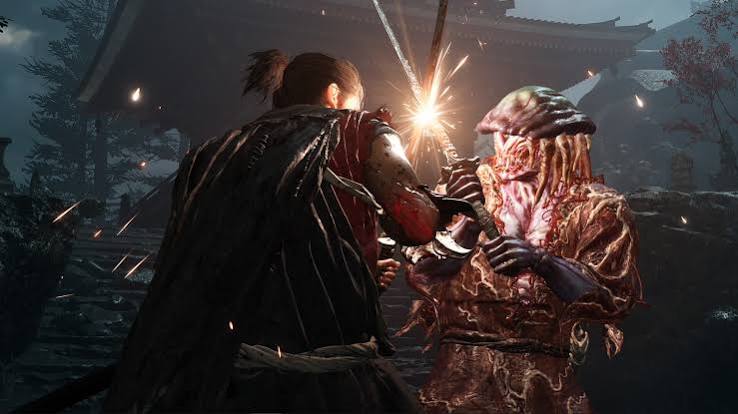
After nearly two decades away, the Onimusha series finally returns with a brand-new mainline adventure.
Onimusha: Way of the Sword puts players in the role of the legendary samurai Miyamoto Musashi, taking them to an alternate version of Edo-period Kyoto filled with supernatural threats and mysterious forces.
Developed and published by Capcom, the game combines traditional samurai action with supernatural elements, cinematic presentation and modern combat mechanics.
The result is a game that clearly remembers what made the original Onimusha games special while attempting to bring the formula into a modern action-adventure experience.
Gameplay
The heart of Onimusha: Way of the Sword is its combat.
Rather than relying purely on fast attacks, the game places considerable importance on timing, positioning and reacting to enemy attacks.
Parrying and the game’s signature Issen technique make encounters feel particularly rewarding when the player successfully recognizes an opening and responds at the right moment.
The combat can become demanding, especially during some of the game’s more challenging encounters.
This creates a strong rhythm where battles are less about constantly attacking and more about understanding what an opponent is doing.
The game also introduces supernatural abilities that give Musashi additional options during both combat and exploration.
These abilities help prevent the experience from becoming a simple sequence of sword fights and provide some variety as the adventure progresses.
Story
The story follows Miyamoto Musashi, who finds himself caught in a supernatural conflict involving the monstrous Genma.
The game takes place in Kyoto during the early Edo period, but this is very much a fantasy interpretation of the historical setting.
One of the most notable aspects of the presentation is Musashi’s likeness to legendary Japanese actor Toshiro Mifune.
This gives the protagonist a distinctive cinematic presence and reinforces the game’s connection to classic Japanese samurai cinema.
As Musashi progresses through Kyoto, the story combines historical references with supernatural events, creating an atmosphere that feels very different from a conventional historical action game.
The narrative also gives Musashi a more personal journey, gradually exploring his reasons for fighting and what kind of warrior he wants to become.
Exploration
Kyoto provides the main setting for the adventure, with different areas offering opportunities to explore, fight enemies and discover additional content.
The environments are visually impressive and make good use of the game’s darker interpretation of the historical city.
Exploration is also connected to Musashi’s supernatural abilities.
Certain powers can be used to reach areas that would otherwise be inaccessible, giving exploration a stronger connection to character progression.
However, the game’s larger environments do not always feel as meaningful as its combat encounters.
Some areas can feel more like connective spaces between the game’s major battles and story sequences.
Combat
Combat is easily one of the game’s most important systems.
The emphasis on timing makes individual encounters feel more deliberate than a traditional hack-and-slash system.
Parrying an incoming attack and immediately responding with a precise counter can create some of the game’s most satisfying moments.
Boss encounters take this idea even further.
Several bosses require players to learn attack patterns and recognize openings rather than simply overwhelming them with attacks.
This can lead to intense battles where understanding an opponent becomes more important than simply having better equipment.
At the same time, enemy variety can become repetitive during longer sections of the campaign, something also noted by several reviews.
Boss Battles
Boss battles are among the strongest parts of Way of the Sword.
They provide some of the game’s most memorable encounters and give the combat system room to shine.
The best fights force players to pay attention to timing, movement and attack patterns.
When everything comes together, the battles feel cinematic without taking control away from the player.
This is particularly effective because the game doesn’t completely separate spectacle from gameplay.
The player is still actively responsible for surviving and responding to the enemy while the presentation creates a dramatic samurai atmosphere.
Graphics
Onimusha: Way of the Sword uses Capcom’s RE Engine, and the visual results are impressive.
Character models, environments and cinematic sequences give the game a polished modern appearance while retaining the dark atmosphere associated with the franchise.
Kyoto is particularly effective as a setting.
The combination of traditional Japanese architecture, supernatural elements and dramatic lighting creates a distinctive visual identity.
Musashi’s design also benefits from the game’s use of Toshiro Mifune’s likeness, helping the protagonist stand out from other modern samurai characters.
Audio
The audio presentation complements the cinematic direction.
Sword clashes, environmental sounds and the game’s soundtrack help establish the atmosphere of a supernatural samurai adventure.
The Japanese setting is also reflected in the game’s overall presentation, reinforcing the feeling that this is a modern interpretation of a classic samurai story.
Players can choose from multiple voice languages, including Japanese, English and Brazilian Portuguese.
Performance
The game benefits from Capcom’s RE Engine and delivers a polished presentation across its supported platforms.
The PS5 version also supports enhanced features such as DualSense functionality and PS5 Pro enhancements.
The overall presentation is particularly impressive during combat and major cinematic sequences, where character animations and environmental details help create the game’s dramatic atmosphere.
Playtime
Onimusha: Way of the Sword is not an enormous open-world RPG.
The main story takes roughly 20 hours, while players who spend more time exploring and completing additional content can expect a longer experience.
This relatively focused structure works well for players who prefer action games that maintain a clear sense of progression without requiring dozens upon dozens of hours to complete the main adventure.
Additional challenges and replay options provide reasons to return after finishing the story.
✓ Positive Points
- Excellent combat system
- Precise parrying and Issen mechanics
- Memorable boss battles
- Beautiful RE Engine visuals
- Strong samurai atmosphere
- Cinematic presentation
- Interesting supernatural abilities
- Miyamoto Musashi is an engaging protagonist
- Focused campaign length
× Negative Points
- Enemy variety can become repetitive
- Some sections have uneven pacing
- Exploration is not always as engaging as combat
- Some modern progression elements feel less polished than the core fighting system
- Difficulty can fluctuate between different sections
★ Final Verdict
Onimusha: Way of the Sword is a successful return for one of Capcom’s most distinctive action franchises.
The game’s greatest strength is its combat. The combination of precise timing, parrying, Issen techniques and challenging boss encounters creates a satisfying system that rewards players who take the time to understand their opponents.
The presentation is another major highlight.
Kyoto looks fantastic, the RE Engine delivers impressive character animations and environments, and the use of Toshiro Mifune’s likeness gives Musashi a unique cinematic presence.
Not everything works equally well.
Enemy variety and pacing can occasionally weaken the experience, while some of the larger environments don’t provide the same level of excitement as the game’s best combat encounters.
Still, when the focus is on Musashi facing a powerful opponent in a carefully designed battle, Way of the Sword delivers some of its strongest moments.
After almost twenty years away, Onimusha: Way of the Sword successfully brings the series into the modern era while maintaining the identity that made the franchise memorable in the first place.