
Elden Ring Nightreign Review – A Bold and Challenging Co-op Adventure
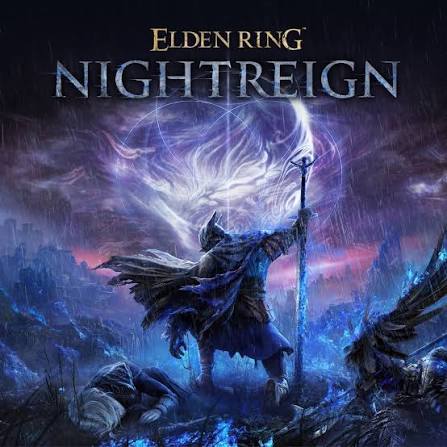
Story
Elden Ring Nightreign takes place within the same universe as Elden Ring but presents a different interpretation of its world and mythology.
Players become Nightfarers, warriors chosen to enter Limveld and confront the mysterious Nightlords. The story unfolds through expeditions, character interactions and discoveries made throughout the ruined landscape.
Rather than delivering a traditional linear adventure, Nightreign gradually reveals its mysteries through repeated runs and the different perspectives of its playable characters.
This structure works particularly well for a game built around repeated expeditions, although players expecting another massive narrative journey like Elden Ring may find the storytelling more fragmented.
Gameplay
The biggest change is the game’s focus on three-player cooperative expeditions.
Each expedition lasts for three in-game days. During the first two days, players explore Limveld, defeat enemies, collect equipment and increase their power before confronting increasingly dangerous bosses. The third day culminates in a battle against a Nightlord.
The fast pace completely changes the traditional Souls formula.
Instead of spending hours exploring one location at your own pace, every decision matters. Players need to determine which areas are worth visiting, which enemies are worth fighting and when it is better to move toward the next objective.
Nightreign successfully turns the familiar Elden Ring formula into something much more compact and unpredictable.
Exploration
Limveld is designed around replayability.
The landscape retains recognizable elements of the Elden Ring universe, but enemy placements, loot, bosses and other elements can change between expeditions.
The shrinking safe area also creates constant pressure.
Players cannot simply wander indefinitely. As the Night’s Tide advances, accessible territory becomes increasingly limited, forcing teams toward encounters and eventually toward the night’s boss.
This makes exploration feel more strategic than traditional Elden Ring exploration.
Graphics
Nightreign maintains the visual identity that made Elden Ring so memorable.
Ruined castles, enormous creatures, dark forests and supernatural landscapes create a world that feels appropriately mysterious and imposing.
The game also benefits from FromSoftware’s strong environmental design, particularly during boss encounters and nighttime sequences.
Although Limveld reuses some familiar visual ideas from Elden Ring, the combination of altered environments and unpredictable encounters gives the world its own identity.
Audio
The soundtrack plays an important role in establishing Nightreign’s atmosphere.
Quiet exploration sections contrast with increasingly intense musical compositions during major encounters.
Boss battles remain the highlight, with dramatic music reinforcing the scale of the enemies and the importance of each expedition.
Sound effects also provide useful combat feedback, helping players understand attacks and environmental dangers during chaotic encounters.
Performance
Nightreign is available on PS5, Xbox Series X|S, PS4, Xbox One and PC.
Performance is particularly important in a game where several players, enemies and visual effects can appear simultaneously.
The game’s technical foundation generally supports its intense combat and large encounters, although performance expectations can vary depending on platform and hardware.
For a multiplayer-focused experience, maintaining visual clarity during major encounters is especially important, and Nightreign generally succeeds in keeping the action readable.
Characters
The Nightfarers are one of Nightreign’s strongest additions.
There are eight playable heroes, each designed around different abilities and playstyles. Every Nightfarer has a passive ability, a character skill and an Ultimate Art.
This creates meaningful differences between characters.
Some are better suited to direct combat, while others can provide different forms of support or specialize in particular situations.
The character system also encourages experimentation, since learning how each Nightfarer works can significantly change how a team approaches an expedition.
Limveld
Limveld is effectively the game’s main character.
The region constantly pushes players forward while providing enough freedom to make each expedition feel different.
Camps, churches, strongholds, caves and other locations provide opportunities to gain experience, equipment and useful resources.
The combination of exploration and time pressure gives Limveld a very different rhythm from Elden Ring’s open world.
It is not simply a place to explore. It is a battlefield where every minute matters.
Progression
Progression is built around making each expedition stronger and learning from previous attempts.
Players collect runes to level up, discover better equipment and obtain passive abilities that can improve their builds.
Successful expeditions also provide permanent progression and Murk, which can be spent at Roundtable Hold.
This structure gives repeated attempts a clear purpose.
Even when an expedition fails, players gain knowledge about enemies, locations and strategies that can make the next attempt more successful.
Nightfarers
The eight Nightfarers are designed to work individually while also creating team synergies.
Every character brings unique abilities to combat, meaning that team composition can influence how an expedition develops.
The cooperative design becomes especially interesting when players combine abilities instead of simply attacking enemies independently.
This makes communication and coordination valuable during difficult encounters.
Boss Battles
Boss battles are the centerpiece of every expedition.
Each of the first two nights ends with a major encounter, while the third day leads to the Nightlord battle.
These fights demand preparation, positioning and knowledge of enemy patterns.
The bosses can also force players to rethink their equipment and abilities, making the preparation phase just as important as the fight itself.
For Souls fans, the boss design remains one of Nightreign’s biggest strengths.
Multiplayer
Multiplayer is at the heart of Nightreign.
The game is primarily balanced around three-player cooperative sessions, with teams exploring Limveld together before facing increasingly difficult encounters.
Players can revive teammates who enter a near-death state by attacking them, creating situations where helping an ally can be just as important as attacking an enemy.
This creates some memorable cooperative moments.
However, the multiplayer focus also means that Nightreign feels very different from a traditional solo Elden Ring adventure.
Replayability
Replayability is arguably Nightreign’s defining feature.
Changing enemy placements, loot, events and other elements mean that expeditions can develop differently from one attempt to another.
The eight Nightfarers also provide another reason to keep playing.
Learning different characters, experimenting with equipment and improving team coordination can turn each expedition into a new challenge.
The structure is particularly effective for players who enjoy roguelite-style progression and repeated attempts.
Accessibility
Nightreign provides multiple character options and different ways to approach combat.
The ability to experiment with different Nightfarers and equipment allows players to find strategies that fit their preferred playstyle.
However, the game’s demanding combat and time-based expedition structure can still present a significant challenge.
Players unfamiliar with FromSoftware’s design may need time to understand the systems and pacing.
Playtime
Nightreign does not follow the traditional structure of a single long campaign.
Its content is built around repeated expeditions, meaning the amount of time players spend with the game depends heavily on how much they enjoy replaying missions, experimenting with Nightfarers and pursuing different Nightlords.
This approach gives the game strong long-term potential for players who enjoy mastering systems rather than simply reaching the end of a story.
✓ Positive Points
- Excellent cooperative gameplay
- Strong boss encounters
- Eight distinctive Nightfarers
- Dynamic Limveld exploration
- Strong replayability
- Satisfying progression system
- Excellent combat foundation
- Effective team-based mechanics
- Strong atmosphere and presentation
× Negative Points
- Multiplayer focus may not appeal to traditional Elden Ring players
- Time pressure can make exploration feel rushed
- Some systems require significant learning
- Repeated expeditions can become repetitive for players who prefer traditional campaigns
- Difficulty can feel inconsistent depending on the expedition
★ Final Verdict
Elden Ring Nightreign is not simply another Elden Ring.
Instead, FromSoftware takes the combat, atmosphere and world of its acclaimed action RPG and restructures them around short, intense cooperative expeditions.
The result is a game where preparation, teamwork and adaptability are just as important as mechanical skill.
Limveld provides enough variation to keep repeated runs interesting, while the eight Nightfarers give players plenty of room to experiment with different approaches.
The greatest strength of Nightreign is also its biggest limitation: the game is built around a specific multiplayer-focused structure.
Players looking for another enormous solo adventure may find the format very different from what they expected. But for those interested in cooperative combat, challenging bosses and replayable expeditions, Nightreign offers a distinctive evolution of the Elden Ring formula.