
Kingdom Come: Deliverance II Review – Is This Medieval RPG Worth Playing?
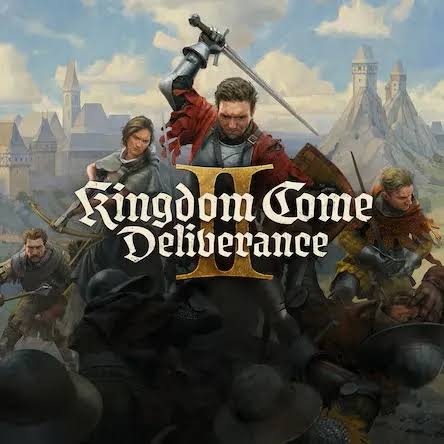
Kingdom Come: Deliverance II is one of those RPGs that asks players to slow down and actually live inside its world. Instead of giving you a traditional fantasy adventure filled with magic, monsters, and exaggerated heroes, Warhorse Studios takes a different approach: a grounded medieval RPG where survival, reputation, combat, dialogue, and everyday decisions all matter.
As a direct sequel to Kingdom Come: Deliverance, the game continues Henry’s journey through 15th-century Bohemia while expanding almost every aspect of the original experience. The result is a massive and ambitious RPG that combines historical authenticity with a deeply reactive open world.
But does Kingdom Come: Deliverance II actually deliver one of the best medieval RPG experiences available today?
A Story That Continues Henry’s Journey
Kingdom Come: Deliverance II picks up after the events of the first game, once again putting players in control of Henry.
Rather than completely reinventing the protagonist, the sequel continues his personal journey while placing him in a much larger conflict. Henry remains a relatively ordinary man surrounded by nobles, soldiers, criminals, merchants, and political figures who all have their own interests.
The story takes place across two major regions of medieval Bohemia, including the area surrounding Trosky Castle and the city of Kuttenberg.
This larger setting gives the sequel considerably more room for storytelling. Political conflicts, personal relationships, religious beliefs, social status, and power struggles all become part of Henry’s journey.
What makes the story particularly interesting is that Henry doesn’t feel like an unstoppable hero. His position in society matters, and the way other characters perceive him can change depending on his actions.
That makes even seemingly simple interactions feel meaningful.
A Medieval World That Feels Alive
The biggest strength of Kingdom Come: Deliverance II may be its world.
This isn’t an open world designed simply to give players a giant map filled with icons. Villages, castles, forests, roads, farms, towns, and cities feel like places that exist independently of the player.
People have routines, professions, social positions, and relationships.
A blacksmith behaves like a blacksmith. A merchant runs their business. Guards patrol settlements. Nobles behave differently from peasants. Criminal activity can have consequences.
The world constantly reminds you that you’re living in a society rather than simply exploring a video game map.
That approach makes exploration incredibly rewarding.
You can follow the main story for hours, but some of the most memorable moments can come from simply getting distracted on the road.
Realism Is More Than Just a Visual Style
Kingdom Come: Deliverance II doesn’t use historical realism merely as an aesthetic.
The game’s systems are designed around the idea that Henry is a person living in a medieval society.
Your equipment matters. Your reputation matters. Your behavior matters. Even your appearance can influence how other characters perceive you.
Wearing dirty or inappropriate clothing can affect social interactions, while maintaining a respectable appearance can make certain situations easier.
The game also incorporates survival-oriented systems such as food, stamina, sleep, equipment maintenance, and other aspects of everyday life.
These mechanics can occasionally feel demanding, but they contribute heavily to the game’s identity.
Kingdom Come: Deliverance II wants you to think about what you’re doing instead of simply running from objective to objective.
Combat Takes Practice
Combat is another area where the sequel refuses to behave like a traditional action RPG.
Sword fighting requires positioning, timing, stamina management, and understanding your opponent.
You can’t simply attack repeatedly and expect to win every encounter.
Different weapons also create different approaches to combat. Swords, axes, maces, and ranged weapons each have their own advantages, making equipment choices important.
The combat system can feel challenging when you’re starting out, especially if you are accustomed to faster action games.
However, that difficulty is part of what makes combat satisfying.
Winning a difficult fight feels earned.
Instead of turning Henry into a superhuman warrior within a few hours, the game makes progression feel gradual.
As you improve your character and become more familiar with the combat system, encounters become much more manageable.
Progression Feels Natural
Kingdom Come: Deliverance II uses a skill-based progression system that encourages players to actually use the abilities they want to improve.
Combat, speech, stealth, survival, crafting, and other activities contribute to Henry’s development.
This makes progression feel connected to the way you play.
If you spend a lot of time talking to people, your social abilities become more important. If you prefer combat, you can develop Henry into a more capable fighter.
The system isn’t about selecting a traditional RPG class at the beginning and being locked into it.
Instead, your character gradually becomes a reflection of your decisions.
Choices Actually Matter
One of the best aspects of Kingdom Come: Deliverance II is how often the game allows players to approach situations differently.
Quests aren’t always simple sequences of:
Go here → defeat enemy → collect item → return.
You can sometimes solve problems through conversation, exploration, investigation, stealth, combat, or a combination of different approaches.
Your reputation can also influence interactions.
This creates the feeling that Henry is actually participating in the world rather than simply completing scripted missions.
Even failure can sometimes produce interesting consequences instead of simply forcing you to reload a save.
Quests Are One of the Game’s Biggest Strengths
The quest design is particularly impressive because many missions feel like small stories rather than generic activities.
Characters usually have motivations, problems, relationships, and personalities.
A simple request can evolve into something much larger, and your decisions can change how situations unfold.
The game also isn’t afraid to let players make mistakes.
You might misunderstand a situation, arrive too late, choose the wrong dialogue option, or simply decide to handle a problem in a completely different way.
That unpredictability makes the world feel more organic.
Characters Give the World Personality
Henry remains the center of the experience, but the supporting cast plays a major role in making the story work.
Characters feel like people with different social positions and motivations rather than interchangeable quest-givers.
The sequel also benefits from the relationships established in the first game.
Returning players will get more context from the previous story, but newcomers can still enjoy Kingdom Come: Deliverance II as a massive medieval RPG on its own.
That said, playing the first game can make certain character relationships and story developments more meaningful.
Visuals and Atmosphere
Kingdom Come: Deliverance II looks fantastic when it comes to environmental detail.
Forests, medieval settlements, castles, fields, roads, and cities create a convincing representation of Bohemia.
The game doesn’t need dragons or magical effects to make its world visually impressive.
Instead, it relies on architecture, lighting, weather, vegetation, character designs, clothing, and environmental details.
The result is an atmosphere that feels grounded and believable.
Walking through a medieval town at night, traveling through a forest during bad weather, or approaching a castle in the distance can be surprisingly immersive.
Audio and Music
The audio design complements the game’s atmosphere extremely well.
Environmental sounds help make settlements feel populated, while combat sounds provide weight to attacks and impacts.
The soundtrack is also used effectively rather than constantly trying to make every moment feel epic.
Quiet moments remain quiet.
Important scenes receive stronger musical emphasis.
That balance helps the world feel more natural.
Performance and Technical Quality
Kingdom Come: Deliverance II is an ambitious game, and that ambition comes with technical challenges.
The sequel is considerably larger and more detailed than its predecessor, meaning performance and visual quality can vary depending on the platform and settings.
However, updates and patches have helped improve the overall experience since launch.
On current hardware, the game can deliver an impressive combination of visual quality, world density, and scale.
It’s still the kind of RPG where occasional technical imperfections can appear, but they don’t overshadow what the game does exceptionally well.
What Could Be Better?
Kingdom Come: Deliverance II isn’t perfect.
Its commitment to realism can sometimes become a disadvantage.
Some systems require patience, and players looking for a fast-paced RPG may find the experience unnecessarily demanding.
The opening hours can also feel slower than what many modern RPG players are accustomed to.
Combat requires practice, progression takes time, and the game frequently expects players to pay attention to details that other RPGs would simply automate.
For some players, that’s exactly what makes it special.
For others, it may become frustrating.
The game also asks for a significant time investment. This is not an RPG designed to be rushed.
Is Kingdom Come: Deliverance II Worth Playing?
Absolutely.
Kingdom Come: Deliverance II is one of the strongest choices for players who want a deep, immersive medieval RPG.
Its greatest achievement isn’t simply creating a large open world.
It’s creating a world that feels like it existed before the player arrived and will continue to exist after they leave.
The combination of historical setting, meaningful choices, realistic systems, detailed environments, character progression, and reactive quests makes the game stand out from most modern RPGs.
It won’t be for everyone.
If you want constant action, simple progression, and a straightforward fantasy adventure, the slower and more realistic design may feel frustrating.
But if you’re willing to invest time in its systems, Kingdom Come: Deliverance II can become an incredibly immersive RPG experience.
PlayOnReviews Score
9.2/10
Kingdom Come: Deliverance II is a remarkable medieval RPG that rewards patience, exploration, and immersion. It may demand more from the player than most modern RPGs, but that commitment is exactly what makes its world so memorable.
Verdict: Highly Recommended
✓ Positive Points
- Immersive medieval world
- Excellent quest design
- Meaningful player choices
- Deep character progression
- Realistic and satisfying combat
- Strong atmosphere
- Detailed environments
- Excellent historical setting
- Large amount of content
× Negative Points
- Can be slow for some players
- Combat has a learning curve
- Realistic systems aren’t for everyone
- Technical issues can still appear
- Requires a significant time investment
★ Final Verdict
Kingdom Come: Deliverance II successfully expands the foundation of its predecessor without losing what made the original unique.
Its world is enormous without feeling empty, its quests encourage experimentation, its combat rewards patience, and its realistic systems make the medieval setting feel remarkably convincing.
Most importantly, it trusts the player.
The game doesn’t always tell you exactly what to do or guarantee that every decision will produce the desired result.
Sometimes you succeed.
Sometimes you fail.
And sometimes your mistakes create stories that you’ll remember long after finishing a quest.
For fans of immersive RPGs, historical settings, and open-world games that prioritize freedom and realism, Kingdom Come: Deliverance II is an easy recommendation.