
Tommy Shelby: How Peaky Blinders Created an Iconic Character
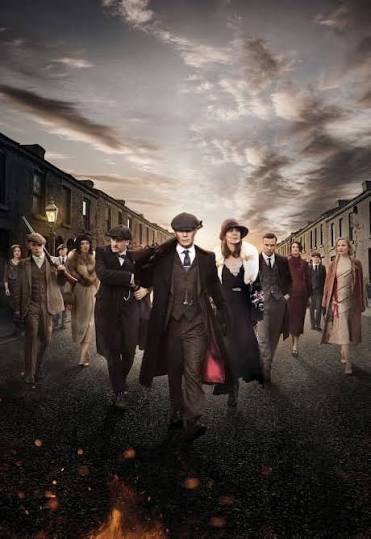
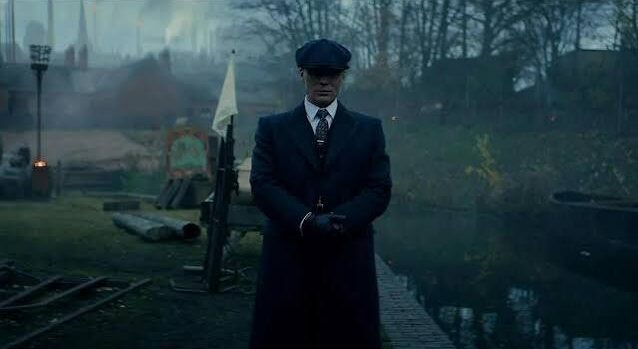
Few television characters have achieved the cultural impact of Tommy Shelby. With his distinctive flat cap, tailored suits, controlled voice, and intense stare, the leader of the Peaky Blinders became one of the most recognizable figures in modern television.
Portrayed by Cillian Murphy, Tommy is the central character of Peaky Blinders, the British crime drama created by Steven Knight. The series follows the Shelby family as they build their influence in Birmingham, England, during the years following World War I.
But Tommy Shelby’s popularity cannot be explained by his appearance alone. Beneath the confident exterior is a complicated character shaped by trauma, ambition, family loyalty, grief, and an ongoing struggle to control his own future.
The series concluded its original television run in 2022, but the story continued with Peaky Blinders: The Immortal Man, a feature film released on Netflix in March 2026. The movie revisits Tommy in 1940, during World War II, and explores questions surrounding his identity, family, and legacy.
So, what makes Tommy Shelby such a memorable character? To understand his lasting appeal, it is worth examining his origins, personality, relationships, evolution, and the performance that brought him to life.
Who Is Tommy Shelby?
Thomas Michael Shelby, commonly known as Tommy Shelby, is the central figure in Peaky Blinders. He is a member of the Shelby family, a working-class Romani family based in Birmingham, England.
When the series begins in 1919, Tommy is a former soldier attempting to establish his position in a city filled with competing criminal organizations, economic inequality, and political tension.
Alongside his brothers, Arthur and John, Tommy becomes involved in illegal business operations. However, he quickly demonstrates that his ambitions extend beyond the streets of Birmingham.
Tommy wants power, financial independence, and recognition. He is determined to move his family into a world where wealthy businessmen and politicians can no longer dismiss them as ordinary criminals.
This ambition becomes one of the driving forces behind the series. As the Shelby organization grows, Tommy’s decisions increasingly affect business leaders, government officials, rival gangs, and people far beyond his hometown.
His rise is not a simple story of success. Every new position brings different responsibilities, enemies, and moral compromises.
Tommy is intelligent and strategic, but he is also capable of cruelty. He can display genuine affection for his family while making decisions that put other people in danger. This contradiction is central to his character.
Rather than presenting Tommy as a straightforward hero, Peaky Blinders invites viewers to understand his motivations without automatically approving of his actions.
How World War I Changed Tommy Shelby
To understand Tommy’s personality, it is essential to consider his experiences during World War I.
Like his brothers, Tommy served in the war. His military experiences left a lasting psychological impact that influences his behavior throughout the series.
When viewers first meet him, Tommy is already carrying emotional burdens that he rarely discusses openly. He often appears calm in situations that would overwhelm other people, but his composure does not mean that he is free from fear or distress.
The series repeatedly explores the relationship between his wartime experiences and his difficulty finding peace after returning to civilian life.
For Tommy, the end of the war does not mean the end of conflict. Instead, he enters a different environment in which violence, danger, and uncertainty continue to shape his decisions.
His experience as a soldier also influences his leadership style. Tommy values planning, discipline, loyalty, and the ability to remain focused under pressure.
However, the same habits that help him succeed in business can make his personal life more difficult. He often approaches emotional problems as if they were strategic challenges that could be solved through calculation.
This tension helps explain why Tommy can appear so powerful in public while remaining deeply conflicted in private.
His past is not simply background information. It is a major part of the character’s identity and one of the reasons his story extends beyond the usual conventions of a crime drama.
The Intelligence Behind Tommy Shelby’s Rise
Tommy’s greatest advantage is not physical strength. It is his ability to study people, anticipate their decisions, and recognize opportunities before his opponents do.
He rarely enters an important negotiation without considering what the other person wants. He understands that power can come from money, information, reputation, political connections, or the ability to influence someone else’s choices.
This makes him a compelling strategist.
Throughout Peaky Blinders, Tommy repeatedly attempts to transform the Shelby family’s position. His ambitions evolve from controlling local criminal operations to pursuing legitimate business interests and political influence.
Each step requires a different set of skills. A street-level rival may respond to intimidation, but a powerful politician or wealthy businessman requires a more complicated approach.
Tommy understands these distinctions and adapts accordingly.
However, his intelligence also creates a dangerous weakness. Because he often believes he can predict how situations will unfold, he sometimes underestimates emotions, unpredictable behavior, and consequences that cannot be controlled.
His plans may be carefully constructed, but the people around him are not pieces on a chessboard. They have their own ambitions, fears, and loyalties.
The resulting conflicts show that intelligence alone cannot guarantee success.
This is one of the most important elements of Tommy’s characterization: his ability to plan makes him powerful, but his belief that he can plan for everything can also become a source of failure.
Why Cillian Murphy’s Performance Made Tommy Shelby Iconic
Tommy Shelby’s cultural impact is inseparable from Cillian Murphy’s performance.
Murphy portrays Tommy with restraint. Instead of constantly explaining what the character is thinking, he frequently communicates through small changes in expression, pauses, posture, and tone of voice.
This approach encourages viewers to pay attention to what Tommy does not say.
A brief look can suggest suspicion. A pause during a conversation can reveal that he is reconsidering a decision. A quiet response can carry more tension than a loud confrontation.
Murphy also avoids portraying Tommy as someone who is always completely in control. Beneath his composed exterior, the character can appear exhausted, uncertain, or emotionally overwhelmed.
These moments prevent Tommy from becoming a one-dimensional fantasy of power.
His confidence is convincing because the performance allows glimpses of the vulnerability beneath it. Viewers see a man who has learned to hide his emotions, not someone who has somehow escaped them.
Murphy’s physical transformation also contributes to the character’s recognizable identity. The flat cap, formal clothing, and distinctive hairstyle became closely associated with the series.
Yet these visual elements work because they reinforce the character’s personality rather than replacing it.
Tommy’s appearance communicates intention. He is someone who wants to control how others perceive him, whether he is meeting a rival, addressing a political audience, or entering a room filled with wealthy businesspeople.
Over multiple seasons, Murphy’s performance gives this carefully constructed exterior a more complicated emotional foundation.
Tommy Shelby’s Most Important Relationships
Although Tommy is often portrayed as a solitary strategist, his relationships are essential to understanding him.
The people closest to him frequently reveal aspects of his personality that remain hidden during business negotiations or confrontations with enemies.
Arthur Shelby: Family Loyalty and Conflict
Arthur Shelby, played by Paul Anderson, is Tommy’s older brother and one of the most important members of the family.
Arthur can be impulsive, emotionally volatile, and deeply affected by his own experiences. Tommy, by contrast, often attempts to approach problems through careful planning.
Their differences create tension, but their relationship is also built on a powerful sense of family loyalty.
Tommy frequently takes responsibility for the direction of the Shelby organization, while Arthur’s actions can complicate the plans they are trying to carry out.
Their relationship illustrates one of the series’ central themes: family loyalty can be a source of strength, but it can also make it difficult to separate personal affection from dangerous decisions.
Polly Gray: The Family’s Moral and Strategic Force
Polly Gray, portrayed by the late Helen McCrory, is one of the most influential figures in the Shelby family.
She understands the family’s history, recognizes the emotional consequences of its decisions, and is often willing to challenge Tommy directly.
Polly is particularly important because she does not simply accept Tommy’s authority. She can question his judgment and identify risks that he would prefer to ignore.
Their relationship adds depth to the family dynamic. Tommy may be the organization’s principal strategist, but he is not the only person capable of understanding its challenges.
Polly’s presence also emphasizes the role of women in the series. Although the story frequently focuses on criminal power and political ambition, the Shelby family’s survival depends on people whose influence extends far beyond formal leadership positions.
Grace Shelby: Love and Vulnerability
Grace Burgess, later Grace Shelby, becomes one of the most significant emotional relationships in Tommy’s life.
Their relationship reveals a side of Tommy that contrasts with his public image. He is capable of affection and emotional openness, even if he struggles to maintain those qualities when his ambitions and responsibilities become overwhelming.
Grace’s story also demonstrates the cost of Tommy’s environment. His world is filled with competing loyalties, dangerous decisions, and consequences that cannot always be reversed.
The relationship has a lasting influence on Tommy’s emotional development, and its consequences continue to shape how he responds to love and loss.
His Children and the Next Generation
Tommy’s children represent another important part of his story.
His relationship with his family is complicated by his ambitions and his difficulty separating his personal life from his public responsibilities.
He wants to build a lasting legacy, but the methods he uses to pursue power can create problems for the very people he hopes to protect.
This contradiction becomes especially significant in The Immortal Man, which places greater emphasis on Tommy’s legacy and his relationship with the next generation of the Shelby family.
The film reinforces a central question that runs throughout his story: what does it mean to leave something behind if the people who inherit it must also live with the consequences of your choices?
The Transformation of Tommy Shelby Across the Series
One reason Tommy remains compelling is that he does not stay the same person throughout the show.
In the first season, he is primarily focused on establishing the Shelby family’s position in Birmingham. He is ambitious, calculating, and determined to prove that the family can operate on a much larger scale.
As the story progresses, his ambitions expand. He pursues increasingly complex business opportunities and becomes involved in political struggles that expose him to powerful institutions and influential figures.
His public status changes, but the underlying conflicts remain.
Tommy continues to face questions about trust, loyalty, morality, and the personal cost of his ambition.
The expansion of his influence also makes it harder for him to maintain the relationships that once gave his life meaning. Success does not necessarily bring peace, and the responsibilities associated with leadership often create new sources of isolation.
By the later seasons, Tommy’s position is far removed from the world in which viewers first encountered him.
Yet he is still struggling with many of the same fundamental problems. He wants control, but he cannot control every consequence. He wants to protect his family, but his decisions sometimes expose them to greater danger.
His evolution is therefore not a straightforward journey from weakness to strength. It is a continuing struggle between ambition and its consequences.
Tommy Shelby’s Style and Cultural Influence
Tommy Shelby has influenced fashion and popular culture far beyond the television series.
His flat cap, tailored coats, three-piece suits, and carefully styled hair became recognizable elements of the Peaky Blinders aesthetic.
The show’s visual identity helped revive interest in early twentieth-century British menswear. Viewers became interested in clothing inspired by the characters, while Tommy’s appearance became a frequent reference point in discussions about television style.
However, the appeal of his look extends beyond individual clothing items.
Tommy’s style is closely connected to how he presents himself. His clothing helps communicate discipline, authority, and an effort to control his public image.
The contrast between his working-class origins and his increasingly formal appearance also reflects his ambitions. As he gains influence, his wardrobe becomes part of the way he navigates unfamiliar social environments.
The character’s influence can also be seen in online discussions, fan edits, photography, and references to his distinctive expressions and mannerisms.
But Tommy’s popularity is not limited to appearance. His intelligence, contradictions, and complicated personal history provide material for discussions that continue long after an episode ends.
The combination of a recognizable visual identity and a complex character is a major reason he remains so culturally significant.
Is Tommy Shelby a Hero or a Villain?
One of the most interesting questions about Tommy Shelby is whether he should be considered a hero, an antihero, or a villain.
The answer depends partly on which moments of his story receive the most attention.
Tommy can demonstrate loyalty, courage, intelligence, and a willingness to take risks for the people he cares about. He can also manipulate others, participate in criminal activity, and make decisions that cause serious harm.
These conflicting qualities make it difficult to place him into a simple moral category.
An antihero is generally a central character who lacks some of the qualities traditionally associated with a conventional hero. Tommy fits that description because his motivations can be understandable even when his methods are morally troubling.
The series allows viewers to understand the circumstances that shaped him without insisting that those circumstances justify everything he does.
This distinction is important. A character can be fascinating without being a model to imitate.
Tommy’s ambition and intelligence help explain his success, but the consequences of his decisions demonstrate that power does not eliminate responsibility.
His story becomes more interesting when viewers consider both sides of his personality instead of focusing exclusively on his most confident or memorable moments.
Tommy Shelby’s Legacy and The Immortal Man
Peaky Blinders: The Immortal Man extends Tommy Shelby’s story beyond the original television series.
Released on Netflix in March 2026, the film moves the narrative into 1940, during World War II. The official synopsis describes Tommy returning from self-imposed exile as the future of his family and country becomes uncertain.
Cillian Murphy reprises his role, while Barry Keoghan joins the story as Duke Shelby, Tommy’s son. The cast also includes Rebecca Ferguson, Tim Roth, Sophie Rundle, and Stephen Graham.
The film explores Tommy at a different point in his life. The man who once appeared determined to expand his influence must confront the consequences of his past and consider what his legacy means.
This development is significant because Tommy’s story has always been about more than the accumulation of power.
His ambitions have affected his family, his relationships, and his understanding of himself. The more influence he gains, the more difficult it becomes to separate his personal identity from the reputation he has built.
The title The Immortal Man also invites questions about the difference between a public legend and an ordinary human being.
Tommy Shelby can seem larger than life because of his reputation, but the story repeatedly reveals the emotional cost of maintaining that image.
The film brings those questions into a new historical setting, placing the Shelby family within the wider uncertainty of World War II.
For fans who have followed Tommy since the first season, the movie offers another opportunity to examine the character’s evolution and the consequences of his decisions.
Why Tommy Shelby Remains One of Television’s Most Memorable Characters
Tommy Shelby’s lasting appeal comes from the combination of several elements.
Cillian Murphy’s restrained performance makes the character immediately recognizable. Steven Knight’s writing places him in situations that challenge his ambitions and expose his contradictions. The historical setting gives the series a distinctive atmosphere, while the Shelby family’s relationships provide emotional stakes beyond the criminal business itself.
Most importantly, Tommy is not simply a powerful character who always knows what to do.
He is someone who tries to control an unpredictable world while struggling with experiences and emotions he cannot fully command.
His intelligence makes him formidable, but it does not make him invulnerable. His loyalty can be admirable, but it does not erase the consequences of his actions. His ambition can create opportunities, but it can also separate him from the people he wants to protect.
These contradictions make Tommy more than a fashionable television gangster.
He is a character whose success and suffering are closely connected, and whose story continually asks whether the pursuit of power can ever provide the peace he wants.
Final Thoughts: The Enduring Appeal of Tommy Shelby
Tommy Shelby became an iconic television character because Peaky Blinders combines a distinctive visual style with a story about ambition, trauma, family, and the cost of power.
Cillian Murphy’s performance gives the character a memorable presence, while the series gradually reveals the vulnerabilities beneath his carefully controlled exterior.
Across six seasons and the feature film The Immortal Man, Tommy’s story explores what happens when a person builds an identity around control but cannot escape the consequences of the past.
His legacy is not defined solely by the power he acquires or the enemies he defeats. It is also shaped by the relationships he struggles to preserve and the consequences that pass to the next generation.
That complexity is what keeps audiences interested in Tommy Shelby. He is neither a straightforward hero nor a simple villain, but a deeply contradictory character whose ambitions continually collide with his humanity.
And that may be the most important reason his story continues to resonate: behind the iconic cap, the tailored suits, and the commanding presence is a man who never entirely succeeds in escaping himself.