
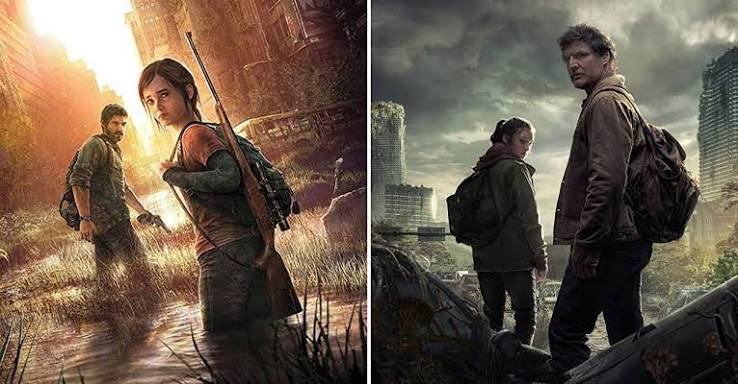
The Last of Us: Biggest Differences Between the Game and Show
Few video game adaptations have generated as much discussion as The Last of Us. Originally developed by Naughty Dog, the franchise became famous for its emotional storytelling, memorable characters, and depiction of a world devastated by a fungal infection.
When HBO adapted the game for television, the challenge was not simply to recreate its most recognizable scenes. The creators needed to transform an interactive experience into a story that could work without player-controlled exploration, combat, or gameplay.
The result is an adaptation that remains faithful to many of the games’ central themes while making significant changes to characters, timelines, relationships, and entire storylines.
The first season follows the main events of The Last of Us Part I, while the second season begins adapting The Last of Us Part II. Both versions tell a story about survival, love, grief, and the consequences of difficult decisions, but they do not always take the same route to reach those themes.
So, what are the biggest differences between The Last of Us game and the HBO series? From the way the infection spreads to the expanded story of Bill and Frank, here are the changes that matter most.
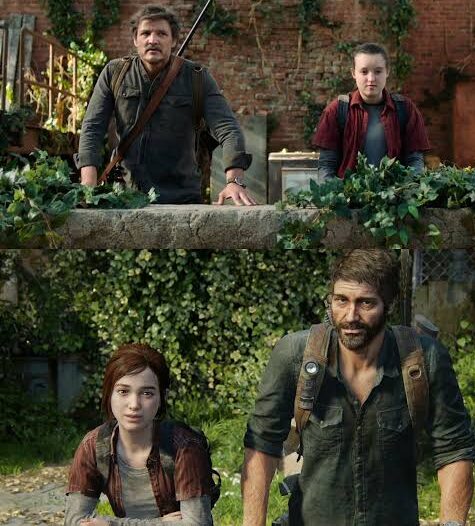
A Different Experience: Playing vs. Watching
The most fundamental difference between the game and the television series is the audience’s relationship with the story.
In the games, players control Joel and, at different points, Ellie. They must navigate dangerous environments, manage supplies, avoid infected creatures, and make decisions about how to approach encounters.
This creates a personal connection to the characters’ experiences. A dangerous encounter is not simply something the audience watches; it is something the player must survive.
The television series works differently. Viewers cannot control the characters, so tension must come from performances, cinematography, dialogue, sound, and the consequences of each decision.
Naughty Dog co-president Neil Druckmann and series co-creator Craig Mazin have discussed how this difference influenced the adaptation. The show could not simply repeat every combat encounter from the game because doing so might make the story feel repetitive.
Instead, action scenes were designed to serve the characters and the narrative. Some encounters were changed, shortened, or removed, while other moments received more attention.
The series also expands the world beyond Joel and Ellie’s immediate perspective. Television can move between characters and locations in ways that help viewers understand what is happening elsewhere.
These changes do not necessarily mean one version is better than the other. The game makes the audience participate in the journey, while the series uses cinematic storytelling to explore the same world from a different angle.
The Outbreak Happens in a Different Year
One of the first major differences appears at the beginning of the story.
In the original game, the Cordyceps outbreak begins in 2013. The main journey takes place approximately 20 years later, in 2033.
The HBO series shifts the outbreak to 2003 and moves the main journey to 2023.
This adjustment helped the television adaptation connect its post-apocalyptic world to a more contemporary setting for its original broadcast.
The change does not fundamentally alter Joel’s role or the central premise. In both versions, he is a survivor who has spent years navigating a dangerous world before being entrusted with Ellie.
However, the different dates change the historical context of the story. Technology, public events, and the passage of time are presented through slightly different timelines.
The series also spends more time establishing the world before the outbreak, giving viewers additional context for Joel’s life and relationships before everything changes.
This is a useful example of how an adaptation can alter a detail without changing the basic emotional purpose of the story.
The Infection Works Differently
Perhaps the most discussed scientific change involves how the Cordyceps infection spreads.
In the games, airborne fungal spores are an important part of the threat. Characters may need to wear gas masks in contaminated environments, making enclosed spaces particularly dangerous.
The HBO series largely removes this element and instead emphasizes infection through bites and fungal tendrils.
The show’s version also introduces a connected network of fungal growth in certain locations. This allows infected creatures to function as part of a broader system, where disturbing one part of the network can alert other infected nearby.
The change creates a different kind of suspense.
In the game, a player may need to decide whether to enter a contaminated area and manage the risk of exposure. In the series, the danger is often communicated through the environment, the behavior of infected creatures, and the possibility of triggering a wider response.
The creators have explained that translating the infected to live action required decisions about how to make them frightening and believable on screen.
The adaptation therefore preserves the fundamental idea of a fungal pandemic while changing some of its practical rules.
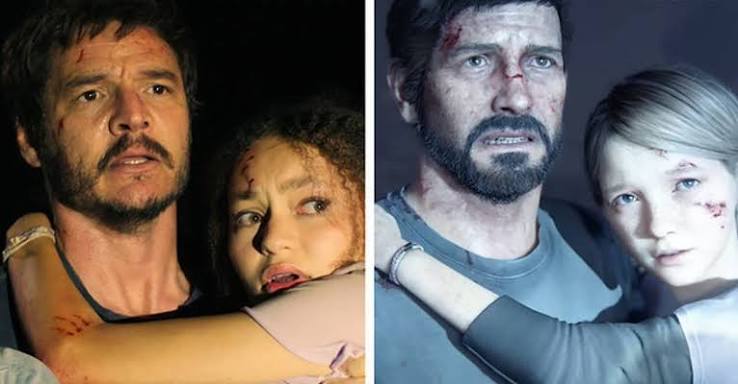
Joel and Ellie: The Same Relationship, Different Development
At the heart of both versions is the relationship between Joel Miller and Ellie Williams.
Joel is a hardened survivor who has experienced profound loss. Ellie is a teenager whose immunity to the infection could have enormous consequences for humanity.
Their initial partnership is not built on immediate affection. Joel sees Ellie as a responsibility, while Ellie must learn to trust someone who can be emotionally distant and difficult to understand.
As they travel together, their relationship gradually changes. They begin to rely on one another, and their connection becomes increasingly similar to that of a parent and child.
Both the game and the series preserve this central emotional arc.
However, the television adaptation gives additional attention to conversations, supporting characters, and events that help viewers understand why Joel and Ellie change.
Because players spend hours controlling Joel and exploring the world, the game can communicate attachment through ordinary actions and shared experiences. The series has to create that connection through scenes, performances, and dialogue.
The result is a different rhythm, even when the emotional destination remains similar.
Bill and Frank: One of the Biggest Changes
Bill and Frank provide one of the clearest examples of the television series expanding beyond the game’s original story.
In the game, Bill is a suspicious survivor who has built a heavily protected environment. Joel and Ellie meet him while trying to find transportation, and their interactions reveal Bill’s isolation and his complicated relationship with Frank.
Frank’s fate is revealed through the events surrounding his departure from Bill, making their relationship part of the game’s broader portrait of survival and loneliness.
The HBO series takes a substantially different approach.
In the third episode, the story explores Bill and Frank’s relationship over many years. Rather than focusing primarily on their role in Joel and Ellie’s immediate journey, the episode presents a more detailed account of their life together.
The adaptation turns their relationship into a self-contained emotional story about love, companionship, and the possibility of building a meaningful life in a ruined world.
This is not a direct recreation of the game’s events. It is an expansion that uses the television format to explore themes that were present in the original story but received less direct attention.
The episode also changes the emotional effect of Bill’s role in the wider narrative.
Instead of primarily serving as a difficult ally who helps Joel and Ellie continue their journey, Bill and Frank become the center of a story about what survival can mean when it includes more than simply staying alive.
The change demonstrates how an adaptation can preserve the themes of its source material while creating a very different experience.
Tess’s Fate Takes a Different Path
Tess is another character whose story changes significantly between the two versions.
In the game, Tess accompanies Joel and Ellie during the early part of their journey. After discovering that she has been infected, she chooses to remain behind and delay the soldiers pursuing them.
Her final sequence is primarily a confrontation with human enemies, emphasizing the danger posed by the organizations controlling the quarantine zones.
In the television series, Tess’s final moments are connected more directly to the infected.
The scene also incorporates the series’ fungal tendrils, creating a different kind of tension from the game’s original sequence.
Although the details change, the broad narrative purpose remains similar: Tess’s decision forces Joel to continue the mission with Ellie.
The adaptation also uses the scene to emphasize how dangerous the infection has become and how little room the characters have for mistakes.
This is an example of the series preserving a major turning point while changing the circumstances that lead to it.
Sam and Henry: A Different Supporting Story
Sam and Henry are important characters in both versions, but their stories unfold differently.
In the game, Joel and Ellie encounter the brothers while attempting to escape a hostile environment. The characters form a temporary alliance, and their journey becomes an important part of Joel and Ellie’s emotional development.
The television series relocates this portion of the story to Kansas City instead of using Pittsburgh as the setting.
The adaptation also expands the surrounding conflict by introducing Kathleen, a leader whose struggle for power adds another layer to the dangers facing the group.
Sam’s portrayal is also changed. In the television version, he is deaf, which affects how he communicates with others and how the characters respond to danger.
The series uses this difference to create additional emotional moments between Sam and Ellie.
Although the broad tragedy of the brothers’ story remains, the adaptation changes the circumstances surrounding their journey and the people involved in the conflict.
These decisions allow the show to build a more developed supporting storyline without reproducing every event exactly as it occurs in the game.
The Series Expands the World Beyond Joel and Ellie
The games generally keep the audience closely connected to the characters being controlled. This approach helps players experience danger and discovery from a personal perspective.
The television series has more freedom to leave its central characters and explore other people affected by the pandemic.
The first season includes additional material involving characters such as Frank, Kathleen, and other survivors. These stories provide a broader picture of how communities form, how authority is established, and how people respond to the collapse of ordinary society.
The show also gives more context to characters who appear only briefly in the game.
This expansion is important because the world of The Last of Us is not defined solely by infected creatures. Human relationships, competing beliefs, and struggles for power are equally important to the franchise.
By showing more of the world outside Joel and Ellie, the series can develop themes that players may have understood primarily through exploration, dialogue, or environmental storytelling.
The trade-off is that additional storylines can change the pacing. Some viewers may appreciate the extra context, while others may prefer the tighter focus of the original game.
Season 1’s Ending: A Familiar Story With Different Emphasis
The first season’s conclusion follows the central events of The Last of Us Part I.
Joel and Ellie reach the Fireflies, who believe Ellie’s immunity could help them develop a vaccine or treatment for the infection.
However, the procedure they plan would require Ellie to die. Joel refuses to accept that outcome and intervenes, taking Ellie away from the hospital.
The series preserves the essential conflict and its moral ambiguity.
Joel’s decision can be understood as an act of love, but it also prevents the Fireflies from pursuing a potential medical breakthrough. Ellie is left without the full truth about what happened.
Both versions end with Joel telling Ellie a story about their escape and Ellie responding with a request that he swear he is telling the truth.
The scene leaves viewers and players with the same fundamental question: can love justify a decision that removes another person’s ability to choose?
The television adaptation changes some details in the hospital sequence and the way the events are presented, but it does not remove the central dilemma.
This is one of the strongest examples of the series remaining faithful to the game’s core story while using a different medium to deliver it.
Season 2: Adapting The Last of Us Part II
The second season begins adapting The Last of Us Part II, a game that takes place several years after the first story.
Both versions establish a time jump and explore the consequences of Joel’s decision at the end of the original story.
Ellie is older, and her relationship with Joel has become more complicated. Their connection remains important, but trust, resentment, and unresolved questions affect how they interact.
The television series expands some of the early events in Jackson, the community where Joel and Ellie have been living.
It also adjusts the timing and presentation of certain scenes to make the story work as a television season.
One major difference is the way the series distributes information about characters and their motivations. A video game can use player control and perspective changes to manage what the audience knows. A television series must achieve a similar effect through editing, dialogue, and the order of its scenes.
The second season does not adapt every event from The Last of Us Part II in a single season. Consequently, the comparison between the two versions must distinguish between events already shown on television and material that belongs to later parts of the game’s story.
The central themes remain recognizable: grief, revenge, loyalty, and the consequences of viewing a conflict from only one side.
Joel’s Death and the Emotional Impact of the Story
Spoilers for Season 2 and The Last of Us Part II.
Joel’s death is one of the most consequential events in the franchise.
The game presents the event as a major turning point, transforming Ellie’s journey and establishing the emotional stakes of the story that follows.
The television adaptation also makes Joel’s death central to the second season, but the surrounding scenes and the way information is revealed differ in places.
These differences are partly related to the nature of the two mediums. A player experiences the game through a controlled perspective, while the series can use performances, editing, and other characters’ reactions to shape the audience’s understanding.
The event also changes how the audience views the characters involved. A person introduced as an antagonist may have a history and motivations that are not immediately apparent.
That complexity is essential to the broader story. The franchise repeatedly challenges the assumption that one side of a conflict has a complete understanding of the other.
Rather than presenting revenge as a straightforward path to justice, The Last of Us Part II explores how violence and grief can create new suffering.
The television adaptation follows this broad thematic direction while adjusting the timing and presentation of some developments.
Ellie and Dina: More Room for Their Relationship
Dina plays an important role in The Last of Us Part II, becoming a central companion in Ellie’s story.
The television series also develops their relationship, using dialogue and additional scenes to establish their connection and the life they share in Jackson.
Because television can devote time to conversations that would not necessarily work as interactive gameplay, the adaptation can emphasize aspects of their relationship that might otherwise be communicated through quieter game sequences.
The series also places their connection within the wider community, showing how personal relationships can provide stability even when the surrounding world remains dangerous.
Their relationship is not simply a break from the larger conflict. It helps establish what Ellie values and what she risks losing as the story progresses.
The changes in presentation demonstrate how the series can preserve a character relationship while adjusting the amount and timing of the information viewers receive.
Abby and the Importance of Perspective
Abby is one of the most significant characters introduced in The Last of Us Part II.
Her role challenges the audience to reconsider the assumptions they may have formed about the conflict. The game gradually expands the story’s perspective, revealing more about people who initially appear to be enemies.
This structure is central to the game’s design because players must spend time with characters whose motivations differ from Ellie’s.
The television series adapts this idea through its own approach to storytelling. Its scenes and episode structure can reveal information at different moments, influencing how viewers understand the characters.
The important distinction is that Abby is not simply an obstacle in Ellie’s journey. She is a character with her own history, relationships, and motivations.
By exploring different perspectives, the franchise asks whether people can understand the consequences of their actions when they see only their own suffering.
The series’ adaptation of this material is still developing, so it is important not to assume that every future game scene will appear in precisely the same form on television.
What remains consistent is the broader theme: understanding another person’s perspective does not erase the harm they may have caused, but it can complicate the idea that a conflict has only one side.
What the Game Can Do That the Series Cannot
The differences between the two versions are not limited to plot changes. Each medium has capabilities that the other cannot fully reproduce.
Exploration and Player Choice
In the games, players can examine rooms, search abandoned buildings, discover notes, and uncover small details about the people who lived in the world before or after the outbreak.
This exploration gives the setting a personal quality. Players are not simply told that the world has collapsed; they discover evidence of that collapse themselves.
The television series can reproduce some of these details through set design and background storytelling, but viewers do not choose where to look or how long to investigate a location.
Combat and Resource Management
The games require players to make decisions about ammunition, equipment, health, stealth, and the risks of confrontation.
A limited supply of resources can make even a small encounter stressful.
The series can communicate the same danger through performances and visual storytelling, but it does not ask viewers to manage resources or personally navigate an encounter.
This is why some action scenes are shortened or changed. The show does not need to teach the audience how a gameplay mechanic works.
Emotional Investment Through Control
Playing as Joel or Ellie can create a distinctive connection to their decisions.
The player is responsible for movement, combat, and survival, even when the larger story is predetermined.
The series creates emotional investment differently. It relies on actors, dialogue, cinematography, and the audience’s interpretation of the characters.
Neither approach automatically produces a stronger emotional response. They simply create different relationships between the audience and the story.
Which Version Is Better: The Game or the HBO Series?
There is no single answer because the game and the series succeed in different ways.
The original game benefits from interactivity, exploration, and the player’s direct involvement in survival. Its pacing allows long stretches of gameplay to develop the relationship between Joel and Ellie.
The series benefits from strong performances and the freedom to expand supporting characters. Stories such as Bill and Frank’s demonstrate how television can explore themes that the game approaches differently.
The adaptation also gives viewers an opportunity to experience the franchise without needing to play the games.
However, some fans may prefer the original versions of certain scenes, especially when changes affect the pacing or the way a character’s story unfolds.
Others may appreciate the additional context and the chance to see familiar events from a new perspective.
Rather than treating the series as a replacement for the games, it makes more sense to view the two as related interpretations of the same world.
The games provide the experience of surviving the journey, while the television series offers a cinematic retelling that expands and rearranges parts of the story.
Final Verdict: A Faithful Adaptation That Takes Its Own Path
The biggest differences between The Last of Us game and HBO series demonstrate that a successful adaptation does not need to reproduce every scene exactly.
The series changes the outbreak timeline, alters the way the infection spreads, expands Bill and Frank’s relationship, modifies supporting storylines, and adjusts the presentation of major events in the second season.
At the same time, it preserves the franchise’s central themes: the bond between Joel and Ellie, the consequences of difficult decisions, the struggle to survive, and the moral complexity of a world without easy answers.
The games remain distinctive because players actively participate in the characters’ journey. The series creates a different experience through performances, cinematography, and expanded character stories.
For fans, the most rewarding approach may be to experience both versions. Playing the games reveals the tension and emotional investment created by interactivity, while watching the series shows how the same ideas can be developed through a different storytelling format.
Ultimately, The Last of Us succeeds in both forms because its strongest element is not a particular action scene or plot twist. It is the complicated human relationships at the center of a world where survival often comes at a personal cost.