
Clair Obscur: Expedition 33 Review – Is This RPG Worth Playing?
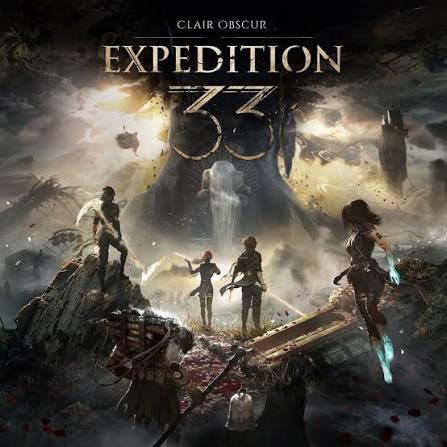
There are games that are designed to be fun, games that are designed to be impressive, and then there are games that seem determined to leave a lasting impression.
Clair Obscur: Expedition 33 belongs firmly in the third category.
Developed by Sandfall Interactive, the RPG takes the familiar foundation of turn-based combat and combines it with real-time defensive mechanics, stylish character progression, a striking fantasy world, and a story built around a genuinely unusual premise.
The result is an RPG that feels familiar enough for fans of the genre to understand quickly, while still introducing enough new ideas to stand apart.
But does Expedition 33 actually live up to the enormous praise surrounding it?
Let’s find out.
A World Built Around Death
The story begins in Lumière, a city facing an annual catastrophe.
A mysterious figure known as the Paintress appears once a year and paints a number on a monolith.
Anyone who is that age disappears.
Every year, the number becomes smaller.
When the number 33 is painted, the people of Lumière know that their time is almost over.
The Expedition 33 is formed for one final mission: travel to the continent, find the Paintress, and attempt to break the cycle.
It’s a simple premise on the surface, but the game gradually turns it into something much more complicated.
Rather than relying entirely on traditional fantasy storytelling, Expedition 33 constantly raises questions about its world, its characters, and the meaning behind what is happening.
That mystery becomes one of the biggest reasons to keep playing.
A Beautiful but Unsettling World
One of the first things you’ll notice about Expedition 33 is how different it looks.
The game draws heavily from Belle Époque-inspired French aesthetics while mixing them with surreal fantasy environments.
The result is a world that can look beautiful one moment and deeply strange the next.
You can travel through landscapes filled with enormous structures, strange creatures, unusual architecture, floating environments, and dreamlike scenery.
The visual identity is one of the game’s biggest strengths.
It doesn’t simply look like another fantasy RPG.
It has its own artistic language.
And that matters.
When you’re exploring a new area, there’s often a genuine curiosity about what you’ll find around the next corner.
Exploration Is More Than Just Walking Between Battles
Expedition 33 isn’t a traditional open-world RPG.
Instead, it uses large areas and more linear environments to create a sense of exploration without turning the game into a massive open-world checklist.
This works particularly well for the game’s pacing.
You aren’t constantly looking at dozens of icons on a map.
Instead, exploration feels more focused.
You can discover hidden paths, optional areas, secrets, enemies, and rewards without feeling like you’re simply clearing map markers.
Later in the adventure, additional ways to travel also open up new possibilities for exploration.
That progression makes the world feel like it is expanding alongside your abilities.
The Combat Is the Real Star
The biggest gameplay innovation in Expedition 33 is its combat system.
At its core, the game is turn-based.
You select abilities, choose targets, manage resources, and decide how your characters should approach each encounter.
But that’s only half the system.
During enemy attacks, you’re expected to react in real time.
You can dodge, parry, and counter incoming attacks.
This changes the feeling of a traditional turn-based battle completely.
Instead of simply waiting for your turn and watching an enemy animation, you’re actively involved throughout the encounter.
PlayStation describes the system as a combination of turn-based strategy and real-time actions, including dodging, parrying, counters, and timed attacks.
And it works surprisingly well.
Turn-Based Strategy Meets Action
The most interesting aspect of the combat system is that it asks you to use two different types of thinking.
First, you need to make strategic decisions.
Which character should attack?
Which ability should you use?
Should you deal damage, apply an effect, or prepare for the next turn?
Then the game asks you to react.
Can you recognize the enemy’s attack?
Can you dodge at the right moment?
Can you learn the rhythm of a boss?
This combination creates battles that feel much more active than traditional turn-based combat.
It also means that stronger enemies aren’t simply damage sponges.
Learning their attack patterns can make a huge difference.
The Parry System Rewards Practice
Dodging is relatively forgiving, but parrying requires much better timing.
That creates an interesting progression for the player.
At first, you might avoid attacks because you’re afraid of missing the timing.
Eventually, you start recognizing animations and trying to parry attacks instead.
Once you become comfortable with the system, combat becomes significantly more satisfying.
There’s a real feeling of improvement.
You’re not simply making your characters stronger.
You’re becoming better at the game.
Difficulty Can Be Adjusted
The game provides three difficulty options: Story, Expeditioner, and Expert.
The easier setting gives players more generous defensive timing windows, while the harder setting demands greater precision.
That’s an excellent approach because the combat system can be challenging for players who aren’t used to reaction-based mechanics.
If you’re mainly interested in the story, you can lower the difficulty.
If you want to master the combat system, Expert provides a much more demanding experience.
The important part is that you’re not forced into one style of play.
Character Builds Add Depth
Combat isn’t only about choosing attacks.
You also have considerable freedom when developing your characters.
Equipment, attributes, skills, and synergies allow you to create different approaches to combat.
This gives the game a satisfying RPG layer.
You can experiment with different combinations and gradually discover which characters and abilities work best together.
The system doesn’t require you to understand everything immediately.
As you play, you’ll naturally learn how the different pieces fit together.
The Characters Carry the Story
Expedition 33’s story wouldn’t work nearly as well without its characters.
Gustave, Maelle, and the other members of the expedition aren’t simply tools for delivering exposition.
Their relationships, personalities, fears, and motivations become increasingly important.
The fact that the expedition members know they have very limited time gives many conversations an additional emotional weight.
Every character is effectively traveling toward an uncertain future.
That creates a sense of urgency without requiring the game to constantly remind you about it.
Gustave and Maelle
Gustave is one of the central figures of the early journey.
His determination gives the expedition a sense of purpose, while his personal motivations help establish the emotional foundation of the story.
Maelle provides a very different perspective.
Her character development becomes particularly interesting as the story progresses, and her relationship with the world around her is an important part of the narrative.
The game gradually expands its cast, giving the expedition a much larger personality than the premise initially suggests.
The Story Knows How to Keep You Curious
One of Expedition 33’s greatest strengths is its ability to make you want answers.
Why does the Paintress do what she does?
What happened to previous expeditions?
What exactly is the relationship between the different characters?
What is really happening in this world?
The game doesn’t answer everything immediately.
Instead, it slowly reveals information.
That makes story progression feel rewarding because new discoveries often change the way you understand something you saw earlier.
The Music Is Exceptional
A game with such a distinctive visual identity needs a soundtrack capable of matching it.
Fortunately, Expedition 33 delivers.
The music can shift from quiet and emotional to dramatic and intense depending on the situation.
During exploration, it reinforces the strange atmosphere of the world.
During major battles, it adds another layer of tension.
The soundtrack doesn’t simply sit in the background.
It actively contributes to the game’s identity.
Visuals and Performance
Expedition 33 was built using Unreal Engine 5, and its environments make excellent use of the technology.
The combination of detailed environments, character designs, lighting, effects, and surreal landscapes creates a game that frequently looks spectacular.
On PS5, the game also supports PS5 Pro enhancements, including a higher-resolution quality option and a 60 FPS performance mode.
The presentation is particularly impressive during large cinematic moments and environmental transitions.
A Strong Debut for Sandfall Interactive
It’s worth remembering that Expedition 33 is Sandfall Interactive’s debut game.
That’s remarkable.
The studio didn’t simply create another conventional RPG.
It created a game with a very recognizable identity, a combat system that takes risks, and a world that feels unlike most other recent RPG settings.
The ambition is obvious.
More importantly, much of that ambition actually works.
What Could Be Better?
Expedition 33 isn’t perfect.
Its combat system can take time to fully understand, especially if you’re not accustomed to reacting to enemy attacks during turn-based battles.
Some players may also prefer a more traditional open-world structure.
The game’s focused exploration is a strength for many players, but those expecting a massive open world with complete freedom may find the structure more restrictive.
The sheer number of systems can also feel overwhelming at first.
You’ll gradually unlock new abilities, equipment options, and progression mechanics, and it takes some time before everything becomes intuitive.
These aren’t deal-breaking problems, but they’re worth knowing before starting.
Is Clair Obscur: Expedition 33 Worth Playing?
Absolutely.
If you enjoy RPGs, especially games that combine traditional turn-based mechanics with more active combat, Expedition 33 deserves your attention.
It’s also a great recommendation for players who want something different from the typical fantasy RPG.
The world is visually distinctive.
The soundtrack is memorable.
The characters are compelling.
The combat has real depth.
And the story gives you enough mysteries to keep pushing forward.
It’s not trying to reinvent every part of the RPG genre.
Instead, it takes several familiar ideas and combines them in a way that feels surprisingly fresh.
Final Rating
9.5/10 — Outstanding
Clair Obscur: Expedition 33 isn’t just another turn-based RPG.
It’s a confident debut that understands what makes classic RPGs enjoyable while being willing to experiment with the formula.
And that combination is exactly what makes Expedition 33 so special.
✓ Positive Points
- Outstanding visual identity
- Excellent soundtrack
- Creative turn-based combat
- Real-time dodging and parrying add depth
- Strong character development
- Interesting world and lore
- Great exploration design
- Flexible difficulty options
- Excellent RPG progression
× Negative Points
- Combat can take time to master
- Some systems can initially feel overwhelming
- Not a traditional open-world RPG
- Players looking for pure action combat may need time to adapt
★ Final Verdict
Clair Obscur: Expedition 33 is one of those games that is difficult to describe without sounding overly enthusiastic.
It takes a traditional RPG foundation and adds a layer of real-time interaction that makes its battles considerably more engaging.
Then it surrounds that combat with a beautiful world, a memorable cast, a strong soundtrack, and a story built around one of the more unusual premises in recent RPGs.
The game isn’t perfect.
But its imperfections are relatively small compared with what it accomplishes.
For RPG fans, it’s an easy recommendation.
For players who normally don’t enjoy turn-based games, it’s even more interesting because its combat may be enough to change their expectations of the genre.