
Control Resonant Review – A Strange and Ambitious Sequel
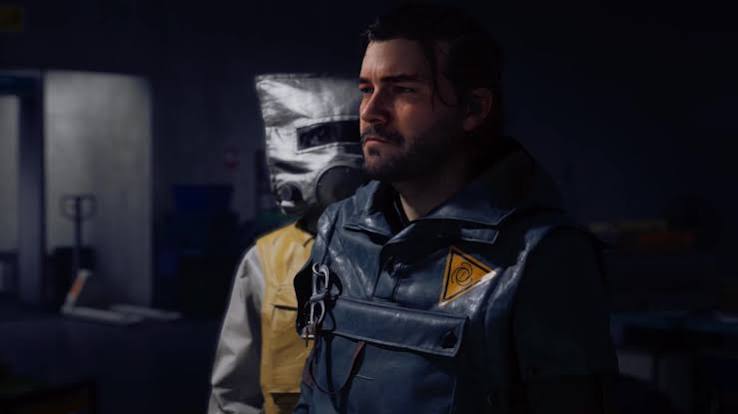
Control Resonant is an ambitious sequel that expands Remedy Entertainment’s supernatural universe into a much larger and stranger experience.
Set in a distorted version of Manhattan, the game puts players in control of Dylan Faden, brother of the original game’s protagonist, Jesse Faden.
With reality itself breaking apart, Dylan must investigate a new paranormal crisis while discovering more about his family, the Federal Bureau of Control and the mysterious forces affecting the city.
Story
Control Resonant follows Dylan Faden, who awakens after years in a coma as Manhattan is being transformed by supernatural forces.
His sister Jesse Faden is missing, leaving Dylan at the center of a crisis involving the Federal Bureau of Control.
The game introduces a new phenomenon known as the Patterning, alongside returning paranormal threats such as the Hiss and the Mold.
Dylan’s journey gradually reveals more about his connection to Jesse and the strange forces influencing reality.
The story also explores Dylan’s personality and his relationship with other members of the FBC.
This gives the sequel a more personal perspective while continuing the mythology established by the original Control.
Gameplay
Control Resonant changes the gameplay formula considerably.
Instead of focusing primarily on the ranged combat of the first game, the sequel places greater emphasis on melee combat, supernatural abilities and exploration.
Dylan can use different abilities and weapon transformations to fight enemies and navigate the environment.
The game also uses a more open structure, with large areas of Manhattan containing side activities, optional encounters and hidden discoveries.
This creates more freedom in how players explore the world and approach different objectives.
The shift toward action RPG mechanics gives Control Resonant its own identity rather than simply reproducing the gameplay of the original.
Exploration
Manhattan is the real star of Control Resonant.
The city has been transformed by paranormal forces, creating distorted buildings, impossible spaces and areas where the laws of physics no longer behave normally.
Different zones contain side activities, hidden encounters and optional discoveries.
Dylan’s supernatural abilities also allow him to explore locations that would normally be impossible to navigate.
Gravity anomalies are particularly interesting because they can completely change orientation and movement.
The result is a world that constantly encourages players to explore beyond the main objectives.
Graphics
Control Resonant is one of Remedy’s most visually ambitious games.
The distorted version of Manhattan combines detailed urban environments with surreal architecture, supernatural effects and dramatic lighting.
The game’s art direction is particularly effective because familiar locations can suddenly become completely alien.
Buildings, streets and interiors can change in ways that make the world feel unstable.
On PC, the game also supports advanced graphical technologies including ray tracing and NVIDIA DLSS 4.5.
The result is an impressive visual presentation that remains striking even when playing with lower graphical settings.
Audio
Audio plays an important role in Control Resonant’s atmosphere.
The city is filled with environmental sounds, supernatural effects, dialogue and atmospheric music.
The soundtrack also changes alongside Dylan’s journey.
The game’s sound design uses unusual musical structures and effects to reinforce the feeling that reality is being distorted.
Voice acting is another important part of the experience, particularly during Dylan’s interactions with other characters.
The combination of sound design and music helps maintain the strange atmosphere that defines the Control universe.
Performance
Control Resonant was designed with modern hardware in mind.
The game launches on PlayStation 5, Xbox Series X|S and PC, with a Mac version planned for later in 2026.
On PC, the game offers a wide range of graphical settings, allowing players with different hardware configurations to adjust the experience.
The game also supports advanced technologies such as ray tracing and DLSS 4.5.
On PlayStation 5 and PS5 Pro, Remedy designed the experience around 60fps gameplay while providing different visual options.
The current version also benefits from the technical evolution of Remedy’s Northlight technology.
Characters
Dylan Faden is the central character of Control Resonant.
His relationship with Jesse remains one of the most important parts of the story, even though Jesse is not the main playable character.
Dylan’s personality also gives the sequel a different tone from the original game.
Other members of the Federal Bureau of Control help expand the story and provide additional perspectives on the paranormal events taking place in Manhattan.
The characters help make the supernatural world feel more personal rather than simply being a collection of strange environments and enemies.
Manhattan
Manhattan feels completely different from a traditional open-world city.
Instead of simply functioning as a large map between missions, the environment itself is constantly changing.
Buildings can become distorted, gravity can behave differently and entire areas can feel disconnected from normal reality.
The city also contains optional discoveries that reward players who explore beyond the main story.
This makes Manhattan feel less like a traditional open world and more like a giant paranormal mystery.
Progression
Control Resonant incorporates stronger action RPG elements than its predecessor.
Dylan can develop new abilities and improve his combat capabilities throughout the adventure.
Different powers can affect both combat and exploration, giving progression a direct impact on how players interact with the world.
The game also allows players to approach certain encounters in different ways.
This progression system works particularly well with the larger environments because new abilities can provide access to previously unavailable areas.
Paranormal Abilities
Supernatural abilities are central to Dylan’s gameplay.
Rather than simply functioning as combat tools, many abilities also influence exploration.
Some powers allow Dylan to navigate unusual environments, while others provide new ways to fight enemies.
The combination of abilities and movement makes the game’s environments feel more interactive.
This is one of the areas where Control Resonant successfully expands on the original game’s concept.
Side Activities
The larger world gives Control Resonant considerably more opportunities for optional content.
Players can discover hidden encounters, side activities and unusual locations throughout Manhattan.
Some activities provide additional story information, while others focus more heavily on exploration and combat.
These optional elements help make the world feel more complete.
They also encourage players to investigate areas that they might otherwise ignore while following the main storyline.
Replayability
The game’s action RPG structure gives Control Resonant additional replay value.
Different abilities and approaches to combat can change how players handle encounters.
The larger world also contains optional discoveries that can easily be missed during a first playthrough.
Players who enjoy exploring every area of Manhattan can spend additional time searching for hidden content and completing side activities.
The game’s strange environments also make returning to previously explored areas more interesting because new abilities can open different possibilities.
Accessibility
Control Resonant includes a range of accessibility options designed to make the experience more customizable.
Players can adjust different aspects of the gameplay and presentation according to their preferences.
The game also features an expanded Assist Mode, giving players additional control over the difficulty and accessibility of the experience.
These options are particularly useful in a game with fast combat, large environments and a considerable amount of visual information.
Playtime
Control Resonant is designed as a substantial single-player action RPG.
The amount of time required to complete the game depends heavily on how much optional content players explore.
Following the main storyline provides a more focused experience, while exploring Manhattan and completing side activities can significantly increase the total playtime.
Players interested in discovering hidden encounters and optional content can expect to spend considerably longer in the game’s world.
✓ Positive Points
- Excellent visual direction
- A fascinating supernatural version of Manhattan
- Strong atmosphere
- Creative paranormal abilities
- Interesting new protagonist
- Large areas to explore
- Strong environmental design
- Ambitious world-building
- Detailed sound design
- More freedom in exploration
- Expanded action RPG mechanics
- Strong connection to the original Control universe
× Negative Points
- The melee-focused combat can feel less satisfying than the original’s ranged combat
- Some encounters can become repetitive
- Enemy balance is inconsistent in certain situations
- Combat progression can feel less compelling than the exploration
- The larger world can occasionally make navigation confusing
★ Final Verdict
Control Resonant is an ambitious sequel that takes the original game’s supernatural concept in a much larger direction.
The distorted version of Manhattan is easily one of its strongest elements, combining impressive environmental design with surreal locations and constantly changing physics.
Dylan Faden also gives the story a fresh perspective while maintaining the connection to Jesse and the events of the original game.
The biggest change is the combat system.
The move toward melee-focused action and RPG mechanics gives Control Resonant a different identity, but it may not appeal equally to everyone who enjoyed the original game’s combat.
Fortunately, the game’s exploration, atmosphere and storytelling remain strong enough to carry the experience.
Control Resonant does not simply attempt to recreate the first game.
Instead, Remedy uses the sequel to expand its universe, experiment with a larger world and explore new ways of combining supernatural storytelling with action RPG mechanics.
For fans of the original Control, the sequel offers a much broader look at the strange world Remedy has created.