
Death Stranding 2: On the Beach Review – Is This Sequel Worth Playing?
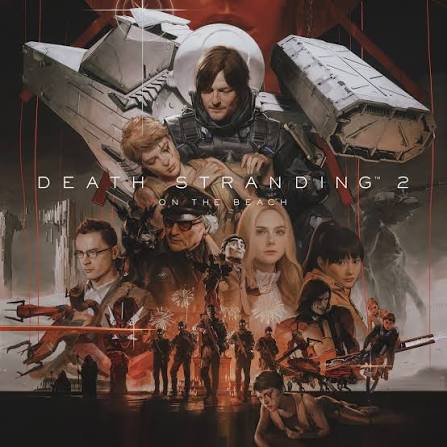
Death Stranding 2: On the Beach is the kind of sequel that refuses to simply repeat what came before it.
Instead of taking the original formula and making it bigger in the most predictable way possible, Kojima Productions expands the world, introduces new systems, adds more combat options, and pushes its strange combination of exploration, storytelling, and social connection even further.
Sam Porter Bridges returns, but his journey is very different this time.
The result is a massive, cinematic, ambitious adventure that can still be divisive in exactly the same way the original game was.
But does Death Stranding 2: On the Beach successfully improve upon its predecessor?
A New Journey for Sam Porter Bridges
Death Stranding 2 continues Sam’s story after the events of the first game.
Following the reconstruction of America, Sam has stepped away from his previous mission and is trying to live a quieter life.
That doesn’t last long.
A new threat emerges, forcing Sam back into a journey that takes him far beyond the world he previously knew.
The story expands beyond the United States and introduces new locations, organizations, characters, and mysteries.
As expected from a Hideo Kojima production, the narrative isn’t straightforward.
Death Stranding 2 mixes science fiction, philosophy, family relationships, environmental themes, technology, death, and human connection into a story that constantly asks players to reconsider what they think is happening.
The Story Is Still Unmistakably Kojima
Death Stranding 2 doesn’t try to become a conventional action game.
Its story remains one of its defining characteristics.
Characters have unusual names, strange motivations, complicated relationships, and dramatic conversations.
The game isn’t afraid to spend considerable amounts of time on cinematic sequences.
For players who enjoy Kojima’s storytelling style, this is a major strength.
For players who prefer stories that are more direct and restrained, the amount of exposition and surreal concepts can occasionally become overwhelming.
But there is no question that Death Stranding 2 has a personality of its own.
Exploration Is Still at the Heart of the Experience
At its core, Death Stranding 2 remains a game about traveling through dangerous environments.
You spend a considerable amount of time walking, climbing, driving, delivering cargo, planning routes, and dealing with environmental obstacles.
That might sound simple.
It isn’t.
The terrain itself becomes part of the gameplay.
Rivers, mountains, uneven ground, weather conditions, enemies, and other environmental hazards can completely change the way you approach a journey.
The game encourages players to think before moving.
Sometimes the fastest route isn’t the safest.
Sometimes a slightly longer path can save equipment, time, and resources.
That sense of planning is one of the most satisfying aspects of the series.
The World Feels More Interactive
One of the biggest improvements over the original is how much more dynamic the world can feel.
The environments aren’t simply beautiful backgrounds.
They can directly affect your journey.
Weather, terrain, structures, vehicles, equipment, and other systems interact with one another to create unexpected situations.
This means that two players can approach the same destination in completely different ways.
One might carefully walk through difficult terrain.
Another might rely heavily on vehicles.
Someone else might use equipment and infrastructure to create a safer route.
The game rewards experimentation.
The Social Strand System Returns
One of Death Stranding’s most unusual ideas remains its asynchronous multiplayer system.
Players can interact with structures and resources left behind by other players without necessarily meeting them directly.
A bridge built by another player can make your journey easier.
A useful structure can save you time.
Messages, signs, equipment, and other contributions can create the feeling that you’re traveling through a world shaped by other people.
This is one of the most unique multiplayer concepts in modern gaming.
You are technically playing alone, but the world constantly reminds you that other players exist.
Combat Has Improved
Combat is considerably more important in Death Stranding 2.
The original game was never designed primarily as an action title, but the sequel gives Sam more tools and opportunities to defend himself.
Weapons, equipment, vehicles, and environmental options provide greater flexibility during encounters.
Stealth remains useful, but players have more freedom to approach hostile situations directly when necessary.
The result is a better balance between exploration and action.
Combat still doesn’t completely replace the game’s delivery-focused identity, though.
The journey remains the main attraction.
Vehicles Make a Big Difference
Vehicles play an important role in Death Stranding 2.
Large environments mean that transportation can dramatically change how you approach deliveries and exploration.
Vehicles aren’t simply faster versions of walking.
Terrain, cargo, obstacles, and environmental conditions all influence how useful they are.
A route that looks easy on foot may be perfect for a vehicle.
Another area may force you to abandon your vehicle and continue on foot.
These situations keep exploration from becoming completely predictable.
Cargo Management Still Matters
Carrying cargo remains a fundamental part of the experience.
You need to think about what you’re transporting, how much you’re carrying, and how you’re going to reach your destination.
The weight and arrangement of your equipment can affect movement.
That means preparation remains important.
Instead of treating inventory management as a simple menu system, Death Stranding turns it into part of the gameplay itself.
For some players, this will be incredibly immersive.
For others, it can occasionally feel like unnecessary micromanagement.
The Characters Are a Major Highlight
Death Stranding 2 features a large cast of memorable characters.
Sam remains the emotional center of the story, but the people around him give the journey much of its personality.
Fragile continues to play an important role, while new characters bring completely different personalities and motivations into the narrative.
The relationships between characters are often just as important as the external conflict.
This is especially true because Death Stranding 2 frequently focuses on themes of loneliness, connection, responsibility, and what it means to remain connected to other people.
Visuals Are Outstanding
Death Stranding 2 is one of the most visually impressive games on PlayStation 5.
Its environments can be enormous, detailed, and atmospheric.
Rock formations, vegetation, weather effects, character models, lighting, and environmental animations all contribute to an exceptionally polished presentation.
The game also benefits from strong art direction.
Even when the environment is relatively empty, it rarely feels visually boring.
Kojima Productions understands how to use scale and composition to make ordinary landscapes feel cinematic.
The Soundtrack Elevates the Journey
Music has always been important to Death Stranding, and the sequel continues that tradition.
The soundtrack is carefully used to emphasize important moments rather than constantly playing in the background.
There are moments where the music transforms a simple journey into something much more emotional.
The contrast between long periods of quiet exploration and sudden musical sequences is particularly effective.
Audio design also contributes to immersion, from environmental sounds to vehicle engines and the atmosphere of different locations.
Performance and Presentation
Death Stranding 2 is clearly designed as a showcase for modern console hardware.
The combination of large environments, detailed characters, cinematic sequences, lighting, effects, and complex environments creates an impressive technical presentation.
The PlayStation 5 hardware allows the game to maintain a high level of visual detail while supporting a world that feels significantly larger and more dynamic than its predecessor.
There can still be occasional technical imperfections, but they are minor compared with the overall quality of the presentation.
The Biggest Problem: The Pace
If there is one thing that will determine whether you love or dislike Death Stranding 2, it’s probably the pacing.
The game is deliberately slow at times.
There are long stretches where you’re simply traveling.
You may spend several minutes navigating terrain before reaching your destination.
The game expects players to appreciate the journey itself rather than treating travel as something that needs to be eliminated.
For some people, that’s the entire appeal.
For others, it can become tedious.
Death Stranding 2 doesn’t try to solve this problem by turning every minute into an action sequence.
Instead, it embraces its identity.
What Could Be Better?
The biggest weakness is that the game’s complexity can sometimes work against it.
There are many systems to understand, numerous pieces of equipment, different types of missions, extensive story sequences, and plenty of information presented to the player.
The narrative can also become difficult to follow.
Kojima’s storytelling style is intentionally strange, but the sheer number of concepts and characters can occasionally make the story feel unnecessarily complicated.
The game also demands patience.
If you want a fast-paced action adventure where every moment is packed with combat, Death Stranding 2 probably won’t be your ideal experience.
Is Death Stranding 2 Worth Playing?
Yes.
But more importantly, it’s worth playing if you understand what kind of game it is.
Death Stranding 2 isn’t simply an action game.
It isn’t simply an open-world game.
It isn’t simply a story-driven adventure.
It’s a combination of exploration, logistics, combat, social interaction, cinematic storytelling, and experimentation.
Its best moments happen when all of those systems come together.
You plan a route, prepare your equipment, travel through dangerous terrain, encounter something unexpected, adapt your strategy, reach your destination, and then see how another player’s contribution might make your next journey easier.
That loop remains unique.
PlayOnReviews Score
9.3/10
Death Stranding 2: On the Beach is a bold and incredibly ambitious sequel that improves upon its predecessor while remaining completely committed to its unusual identity. It won’t be for everyone, but for players willing to embrace its slower pace and unconventional design, it is one of the most memorable adventures available on PS5.
Verdict: Highly Recommended
✓ Positive Points
- Exceptional visual presentation
- Deep and immersive exploration
- More flexible combat
- Excellent world design
- Strong character development
- Unique asynchronous multiplayer
- Outstanding soundtrack
- Ambitious storytelling
- Excellent use of PS5 hardware
- Many interconnected gameplay systems
× Negative Points
- Slow pacing won’t appeal to everyone
- Story can become complicated
- Large number of systems may feel overwhelming
- Long cinematic sequences
- Some deliveries can feel repetitive
★ Final Verdict
Death Stranding 2: On the Beach is an ambitious sequel that expands almost every part of the original game without abandoning its identity.
The world is bigger, exploration is more dynamic, combat is more flexible, the technical presentation is exceptional, and the story remains unapologetically strange.
It isn’t a game designed to please everyone.
Its slower pacing, complex systems, long cinematic sequences, and unusual storytelling can be frustrating for players looking for a conventional action adventure.
But for those willing to embrace its rhythm, Death Stranding 2 offers something remarkably different.
It’s a game about traveling through a dangerous world, but more importantly, it’s a game about why the journey matters.