
Endless Legend 2 Review – A Deep and Ambitious Strategy RPG
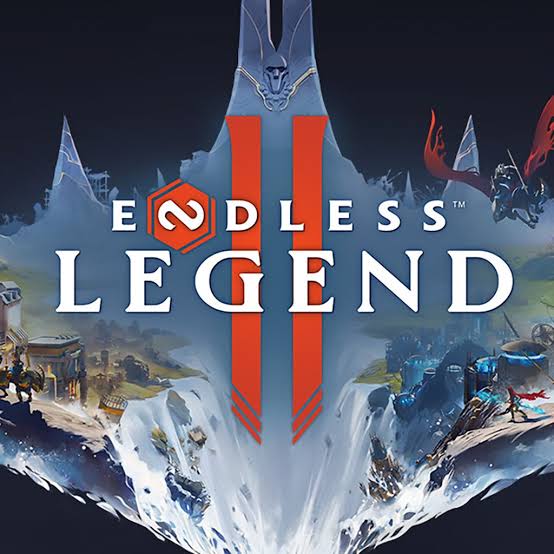
Endless Legend 2 is the latest strategy game from Amplitude Studios, returning players to the Endless universe with a new world, new factions and a constantly changing battlefield.
Set on the dying planet of Saiadha, the game combines traditional 4X strategy with unusual systems that can dramatically change how a campaign develops. One of its defining mechanics is Tidefall, a recurring event that alters the landscape and reveals new areas, resources and opportunities.
Released on September 17, 2026, Endless Legend 2 has been praised for its faction design, world-building and strategic depth. Reviews have also pointed to a few problems, including an occasionally confusing interface, uneven lighting and situations where the AI can create unusual combat scenarios.
Story
Endless Legend 2 takes place on Saiadha, a world facing environmental and existential changes.
The planet is not simply a static map waiting to be conquered. Its geography changes over time, forcing civilizations to adapt to new conditions.
Rather than presenting a traditional linear story, the game builds its narrative through factions, exploration and the events that occur throughout a campaign.
Each civilization has its own identity, motivations and mechanics, making the world feel like a collection of competing societies rather than interchangeable armies.
This approach allows the story to emerge naturally from gameplay.
Gameplay
Endless Legend 2 follows the classic 4X formula.
Players explore the map, expand their territory, develop cities, research technologies, manage resources and compete with other factions.
The difference is how many of these systems interact.
A campaign can change significantly when the world itself changes, particularly when Tidefall transforms previously inaccessible areas.
This means exploration is not simply about discovering what is already there.
Players must also think about what might become available later.
The strategic possibilities are extensive, although the large number of systems can make the game difficult to understand during the first few hours.
Exploration
Exploration is one of the game’s strongest mechanics.
Saiadha is designed around discovery, and players are encouraged to send units into unknown territory to locate resources, regions and strategic opportunities.
The Tidefall system makes exploration even more important.
When the event occurs, the landscape changes and previously hidden locations can become accessible.
This prevents the map from feeling completely predictable.
A region that appears unimportant early in a campaign can become strategically valuable later.
Graphics
Endless Legend 2 continues Amplitude’s tradition of using a distinctive visual identity rather than aiming for photorealism.
Saiadha has a painterly science-fantasy aesthetic that helps separate its factions and environments.
The different civilizations also have unique visual styles, reinforcing the feeling that each one belongs to a different culture.
The presentation is generally attractive, although some reviews have criticized the lighting in certain situations.
Even with those limitations, the overall art direction remains one of the game’s defining characteristics.
Audio
The soundtrack complements the game’s science-fantasy atmosphere.
Different environments and factions receive musical treatment that helps establish the identity of each part of the world.
The audio design is intentionally atmospheric rather than constantly dramatic.
This works particularly well during exploration, when the player is studying the map and planning future moves.
The combination of music and environmental sounds helps make long strategy sessions feel more immersive.
Performance
Endless Legend 2 is a complex strategy game with a large amount of information being processed during each turn.
Performance can therefore depend on hardware and the size of the current campaign.
The game generally delivers a stable strategy experience, although optimization and interface responsiveness can become more noticeable as campaigns become increasingly complex.
The visual presentation is not technically demanding in the same way as a modern cinematic action game, but the simulation underneath the presentation is considerably more complicated.
Characters
Characters are represented largely through the factions and leaders that control the civilizations of Saiadha.
This is where Endless Legend 2 becomes particularly interesting.
The factions are not simply cosmetic alternatives.
They can fundamentally change how a campaign is played.
Some focus on technology, others on resources, territory or unusual mechanics.
The result is a system in which learning a new faction can almost feel like learning a different game.
Saiadha
Saiadha is arguably the game’s most important character.
The planet constantly influences what players can do.
Its changing geography means that the map is not merely a passive environment.
Tidefall can reveal new terrain and resources, forcing civilizations to reconsider their plans.
This creates a stronger connection between environmental changes and strategy than many traditional 4X games provide.
Instead of simply expanding across a fixed map, players must adapt to a world that continues to evolve.
Progression
Progression is built around research, territory, resources and technological development.
Players gradually unlock new possibilities as their civilization grows.
Research allows factions to improve their capabilities and develop new strategic options.
Economic progression is equally important because maintaining an expanding civilization requires careful resource management.
The game’s systems are interconnected, meaning that ignoring one area can eventually create problems elsewhere.
Factions
Faction design is one of Endless Legend 2’s biggest strengths.
Each faction has its own mechanics, visual identity and strategic approach.
This asymmetry means that choosing a faction is not simply choosing a different appearance.
It determines how players interact with the game’s systems.
PC Gamer particularly praised the game’s faction design, highlighting how creatively the civilizations break traditional strategy-game conventions.
For strategy fans, this creates considerable replay value.
Learning one faction does not necessarily prepare you completely for another.
Strategy
Strategy is where Endless Legend 2 truly shines.
The game constantly asks players to balance short-term decisions against long-term objectives.
Expanding too quickly can create economic problems.
Focusing too much on technology can leave a civilization vulnerable.
Ignoring neighboring factions can eventually result in conflict.
Meanwhile, environmental changes can force players to abandon plans that previously seemed ideal.
The result is a game where there is rarely a single obvious solution.
Combat
Combat uses tactical positioning rather than simply comparing army statistics.
Terrain can influence encounters, making the location of a battle important.
Players need to consider positioning and unit capabilities when deciding how to approach an engagement.
This adds another layer of strategy beyond the larger 4X systems.
However, some encounters can become awkward when the AI gains advantages that encourage players to exploit game mechanics rather than engage in completely natural tactical battles.
Side Activities
Endless Legend 2 does not structure side content like a traditional RPG.
Instead, optional objectives, exploration, events and additional strategic opportunities appear naturally during campaigns.
These activities can provide resources, information or other advantages.
The system works well because optional content is generally connected to the larger strategic picture.
Exploring an area is not simply about collecting something for completion.
It can directly influence the future of a civilization.
Replayability
Replayability is one of the game’s strongest qualities.
The combination of different factions, maps, strategic decisions and changing environmental conditions means that no two campaigns need to develop in exactly the same way.
The asymmetrical faction design is particularly important.
After completing a campaign with one civilization, choosing another can completely change the player’s priorities.
The changing world also ensures that familiar strategies cannot always be applied in exactly the same way.
Accessibility
Endless Legend 2 provides the expected options for adjusting the strategy experience, but accessibility is not limited to settings.
The game also allows players to approach campaigns at their own pace.
Because turns can be carefully considered, players do not need to react instantly to most situations.
The larger challenge is learning the systems.
New players may need time to understand how economy, research, diplomacy, exploration and combat interact.
Playtime
Endless Legend 2 is designed for long-form strategy sessions.
A single campaign can last many hours, particularly when players explore the map thoroughly and manage a large civilization.
The exact playtime varies considerably depending on the chosen settings, faction and victory conditions.
More importantly, the game encourages repeated campaigns rather than treating one playthrough as the complete experience.
✓ Positive Points
- Excellent asymmetrical faction design
- Dynamic world affected by Tidefall
- Deep 4X strategy systems
- Strong exploration mechanics
- Distinctive science-fantasy art direction
- Interesting tactical combat
- High replayability
- Strong world-building
- Multiple strategic approaches
- Campaigns can develop in unexpected ways
× Negative Points
- Large number of systems can overwhelm new players
- Interface can occasionally feel unintuitive
- Some lighting issues affect presentation
- AI can create awkward combat situations
- Long campaigns can become increasingly complex
- Some systems require considerable time to fully understand
★ Final Verdict
Endless Legend 2 is an ambitious strategy game that understands one of the most important principles of the 4X genre: the world should give players reasons to adapt.
Saiadha achieves that through Tidefall.
The changing environment means that the map is never completely static, and this gives exploration a purpose beyond simply revealing territory.
The faction design is equally impressive.
Each civilization approaches the game’s systems differently, creating campaigns that can feel dramatically different depending on who the player chooses.
Combat also adds another important layer.
Terrain and positioning can influence battles, encouraging players to think about where an engagement happens rather than focusing only on the size of an army.
The biggest weakness is complexity.
Endless Legend 2 contains a huge number of interconnected systems, and the interface does not always make those systems as easy to understand as they could be.
Some combat situations can also feel strange when the AI creates circumstances that encourage mechanical exploitation.
Still, these problems do not erase the game’s biggest achievement.
Endless Legend 2 creates a world where strategy is constantly changing.
The factions are distinct, the planet evolves and every campaign can develop in unexpected directions.
For players who enjoy deep turn-based strategy and 4X games, it offers a substantial experience with enough variety to support repeated campaigns.