
How Do Developers Create Massive Open-World Games?
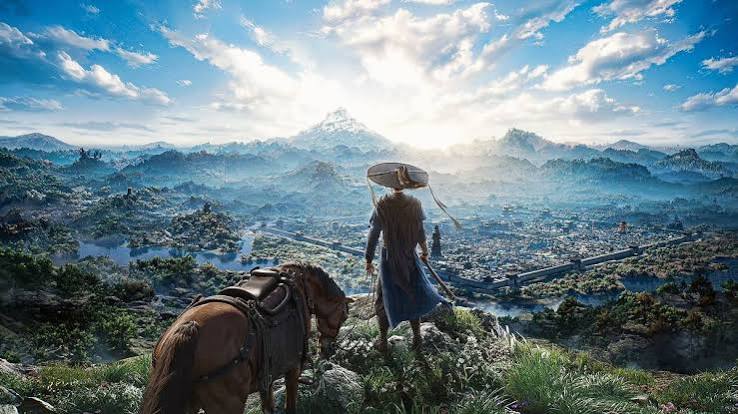
Open-world games can feel almost impossible to understand from a development perspective. A single game can contain enormous maps, cities, forests, buildings, characters, missions, vehicles, animals, weather systems, physics, and hundreds of different interactions.
Games like GTA, Red Dead Redemption, Elden Ring, and The Legend of Zelda have shown just how massive modern game worlds can become.
But how do developers actually create all of this?
The answer involves years of planning, specialized teams, powerful game engines, complex technology, constant testing, and an incredible amount of optimization.
What Makes an Open-World Game Different?
In a traditional linear game, developers have much more control over what the player sees and when they see it.
The player might enter a room, watch a cutscene, complete a mission, and then move to the next area.
Open-world games work differently.
The player can often choose where to go, what to explore, which missions to complete, and how to interact with the world.
That means the developers have to create a world that continues functioning even when the player is doing something unexpected.
A city cannot simply exist as a background.
Cars need to move.
NPCs need to react.
Animals need to behave differently depending on their surroundings.
Weather can change.
Missions need to work.
Buildings and objects need to load correctly.
And all of this has to happen while the game maintains acceptable performance.
It Starts With a Massive Plan
Before developers build thousands of buildings and objects, they need to understand what the world is supposed to be.
Designers usually begin with concepts, maps, references, sketches, prototypes, and layouts.
They decide things such as:
- Where cities and towns will be located
- Where mountains, forests, rivers, and roads will exist
- Where important missions will happen
- How players will travel between locations
- Where enemies and NPCs will appear
- Which areas should be accessible
- How the world should feel
The map is not simply created randomly.
Every major location needs to serve a purpose.
A mountain might separate two regions.
A highway might connect important cities.
A small village might exist because a particular quest takes place there.
Even seemingly empty areas can be designed to create a specific feeling of exploration.
Building the World Piece by Piece
Developers don’t usually create an entire massive world at the same time.
The process is divided into smaller pieces.
One team might work on terrain.
Another can focus on buildings.
Another can create vegetation.
Others work on characters, vehicles, weapons, animations, sounds, missions, and environmental effects.
This allows hundreds or even thousands of developers and specialists to work on different parts of the same project.
Eventually, those pieces have to work together as one coherent world.
And that’s where things become extremely complicated.
How Do Game Engines Handle Such Huge Worlds?
Game engines provide many of the tools developers need to create and operate these environments.
They can help manage graphics, physics, animation, lighting, audio, artificial intelligence, object interactions, and much more.
However, simply putting everything into the game at once would be incredibly inefficient.
Imagine a massive map containing millions of objects.
The game doesn’t need to render every single object at full quality at the same time.
Instead, modern games use techniques that determine what needs to be loaded, displayed, or simulated based on the player’s location.
The World Is Often Loaded in Sections
One of the biggest challenges of open-world games is loading the environment without constantly stopping the player.
As you travel through the world, the game can load the areas that are approaching while removing or reducing the resources used by areas that are far away.
This process is largely invisible to the player.
You might be driving through a city, for example, while the game is preparing the next neighborhood before you reach it.
This allows developers to create worlds that are much larger than what the hardware could realistically keep fully active at once.
NPCs Make Everything Even More Complicated
A massive world would feel empty if it didn’t contain people and creatures.
That’s why NPC systems are extremely important.
Developers can give characters routines, behaviors, reactions, animations, dialogue, and different responses to events.
A city might have pedestrians walking around, vehicles following roads, workers performing different activities, and characters reacting to the player’s actions.
The goal is to make the world feel alive.
The challenge is that all of these systems consume processing power.
The more complex the simulation becomes, the more carefully developers have to control what is happening behind the scenes.
AI Helps Create a Living World
Artificial intelligence doesn’t necessarily mean that every NPC is incredibly intelligent.
Instead, developers create systems that allow characters to respond to different situations.
An NPC might know where to walk, how to avoid obstacles, when to react to danger, and what to do during different parts of the day.
Different systems can work together to create the illusion of a living world.
The player doesn’t need to know exactly how the system works.
They simply need to believe that the character belongs in that world.
Weather and Day-Night Cycles
Many open-world games also simulate time.
The sun moves.
Shadows change.
The sky becomes darker.
Some NPCs go home.
Others begin working.
Different animals can appear at different times.
Weather can also change the environment.
Rain can make roads look different, storms can affect visibility, and snow can transform entire regions.
Each additional system increases the complexity of the game.
Missions Have to Work Everywhere
One of the hardest problems in an open-world game is making missions work when the player has enormous freedom.
In a linear game, developers know exactly where the player should be.
In an open world, the player might arrive from almost any direction.
They might already have completed another activity.
They might have a different vehicle.
They might have interacted with an NPC earlier.
They might even approach a mission in a completely unexpected way.
Developers therefore need systems capable of handling many possible situations.
That’s one reason open-world games require so much testing.
Testing a Massive World Is a Nightmare
Imagine trying to test every road, building, mission, NPC, weapon, vehicle, animation, weather condition, and interaction in a huge game.
Now imagine combining all of them.
A player might discover an extremely rare bug simply by performing actions in an unusual order.
They could get stuck somewhere.
An NPC might disappear.
A vehicle might behave incorrectly.
A mission could fail to trigger.
An object could appear in the wrong location.
The possibilities are enormous.
That’s why large games go through extensive testing throughout development.
Optimization Is One of the Biggest Challenges
Creating a beautiful world is only half the battle.
The game also needs to run properly.
Developers constantly look for ways to reduce unnecessary processing and memory usage while maintaining visual quality.
This can involve techniques such as:
- Level of detail systems
- Efficient texture management
- Object streaming
- Occlusion systems
- Asset optimization
- Efficient lighting
- Memory management
- AI optimization
The objective is simple:
Make the game look as good as possible while using the available hardware efficiently.
Why Do Open-World Games Take So Many Years?
When you put everything together, the answer becomes obvious.
Developers aren’t simply creating a map.
They’re creating an entire interactive ecosystem.
A modern open-world game may require specialists in:
- Programming
- 3D modeling
- Animation
- Character design
- Writing
- Sound design
- Music
- Artificial intelligence
- Level design
- Lighting
- Physics
- User interface
- Quality assurance
- Optimization
And these teams need to coordinate throughout the entire development process.
That’s why creating a massive open-world game can take many years.
The Secret Is That Most of the Work Is Invisible
Perhaps the most impressive part of an open-world game isn’t what the player sees.
It’s everything happening behind the scenes.
When you walk through a city and see pedestrians, traffic, weather, buildings, animals, sounds, lighting, and distant landscapes working together, you’re seeing the result of countless systems interacting simultaneously.
The player might only think:
“This world feels alive.”
But behind that feeling is an enormous amount of engineering and design.
Final Thoughts
Massive open-world games are some of the most technically ambitious projects in the entire entertainment industry.
Developers have to combine art, technology, storytelling, artificial intelligence, physics, sound, animation, and optimization into one giant interactive environment.
And the bigger the world becomes, the more complicated every system becomes.
So the next time you enter a massive game world, take a moment to look around.
That enormous city, forest, desert, or fantasy kingdom isn’t just a map.
It’s the result of years of work designed to make you believe that an entire world exists beyond your character.