
Phantom Blade Zero Preview — Gameplay, Story & Release Date
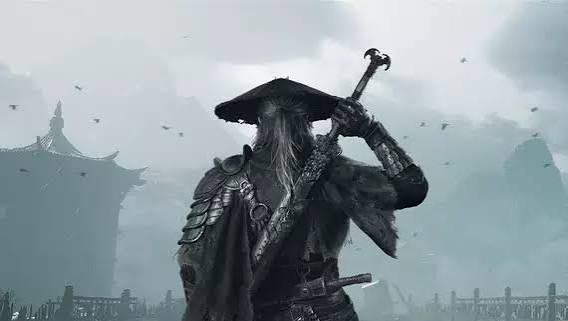
Phantom Blade Zero is one of the most anticipated action games of 2026, combining fast-paced martial arts combat, a dark fantasy setting, and cinematic boss battles inspired by classic Chinese wuxia storytelling. Developed by S-Game, the upcoming action RPG follows an assassin named Soul as he attempts to uncover a dangerous conspiracy while racing against a deadline that could determine his fate.
Built with Unreal Engine 5, Phantom Blade Zero has attracted attention for its fluid combat animations, elaborate environments, and distinctive combination of traditional martial arts aesthetics with futuristic mechanical designs. Instead of following a conventional fantasy adventure, the game presents a world filled with secret organizations, powerful fighters, supernatural mysteries, and morally complicated characters.
The game is scheduled to launch on October 29, 2026, for PlayStation 5 and PC. Recent hands-on previews published by gaming outlets have offered a closer look at its opening chapters, combat systems, difficulty options, and boss encounters.
But what makes Phantom Blade Zero different from other action RPGs? Here is everything players should know about its story, gameplay, progression, difficulty settings, graphics, and release plans before deciding whether to buy it.
What Is Phantom Blade Zero?
Phantom Blade Zero is an action RPG developed by S-Game, a studio aiming to combine the excitement of martial arts cinema with the depth of modern action games.
The adventure takes place in a fictional world inspired by wuxia, a Chinese storytelling tradition centered on martial artists, rival factions, personal honor, revenge, and extraordinary fighting abilities.
The game adds its own distinctive identity to these influences through a setting that blends traditional Chinese architecture and martial arts imagery with mechanical technology, unsettling creatures, and supernatural elements. The developers describe this visual and thematic direction as “Kungfupunk.”
Players control Soul, an elite assassin who becomes the target of a conspiracy after being accused of murdering his master. During the incident, Soul suffers a devastating injury that leaves him with only 66 days to live.
With limited time remaining, he must discover who is responsible for the betrayal, uncover the truth behind the conspiracy, and confront enemies connected to the secretive world of martial arts.
Phantom Blade Zero is designed around direct action rather than turn-based combat. Players control attacks, defensive actions, movement, and weapon combinations in real time, making timing and decision-making central to the experience.
Its mixture of cinematic presentation and demanding combat has made it an interesting prospect for players who enjoy games built around learning enemy patterns, mastering abilities, and overcoming powerful opponents.
Story: Soul’s Race Against Time
The central story of Phantom Blade Zero revolves around Soul’s attempt to clear his name and understand the events that destroyed his previous life.
After being framed for murdering his master, Soul finds himself hunted by former allies and dangerous enemies. His severe injury leaves him with only 66 days to live, creating a deadline that gives the adventure an additional sense of urgency.
Rather than simply pursuing revenge, Soul must navigate a world in which loyalty, betrayal, and personal motives are difficult to separate. Different factions operate according to their own rules, and the truth behind the conspiracy gradually becomes part of the larger mystery.
The story takes place across the Wulin, a fictional martial arts world populated by skilled fighters, secretive organizations, and characters with competing interests.
This setting provides room for encounters that extend beyond straightforward battles. Rivalries and personal relationships help establish why different characters fight, while the larger conspiracy gives Soul a reason to continue searching for answers.
The protagonist’s limited lifespan is also an important narrative device. It raises questions about what he can accomplish before time runs out and how his decisions might affect the people he encounters.
However, the effectiveness of the complete story will depend on its pacing, dialogue, character development, and ending. Preview sessions provide an introduction to the premise, but they cannot establish whether the full narrative delivers a satisfying conclusion.
For players who appreciate action games with a strong central mystery, Soul’s predicament offers a compelling starting point.
Combat and Fighting Mechanics
Combat is the main attraction of Phantom Blade Zero.
The game emphasizes fast attacks, precise defensive actions, weapon combinations, and dramatic encounters against both ordinary enemies and powerful bosses. Rather than relying exclusively on a single weapon or repeated attack, players are encouraged to develop a fighting style that suits their preferences.
The animations are designed to evoke martial arts cinema, with rapid exchanges, elaborate movements, and attacks that connect naturally with the game’s visual presentation.
However, the system is not simply about making every fight look impressive. Players must understand when to attack, when to defend, and how to respond when an opponent changes tactics.
Parrying is an important part of the combat experience. A well-timed defensive action can create opportunities to counterattack, while poor timing may leave Soul vulnerable to incoming damage.
Different enemies require different approaches. Some encounters emphasize quick reactions, while others demand patience and a better understanding of attack patterns. Bosses can combine several types of attacks, forcing players to adapt instead of relying on one strategy throughout an entire battle.
Recent hands-on previews have praised the combat’s responsiveness and variety, although the final experience will depend on how well the complete game balances its encounters and progression systems.
For players who enjoy action games where mechanical skill matters, Phantom Blade Zero could provide a satisfying challenge. Its success will ultimately depend on whether its combat remains enjoyable and understandable as enemies become more demanding.
Weapons, Skills, and Combat Customization
Phantom Blade Zero offers a range of weapons and combat options intended to support different playstyles.
Players can experiment with weapon combinations, learn new techniques, and improve their equipment as they progress through the adventure. This flexibility is important because different weapons can change the rhythm of combat and the opportunities available during an encounter.
Some approaches may favor rapid attacks and aggressive pressure, while others can provide different ways to manage distance, defend against opponents, or create openings for stronger attacks.
The game also features special abilities and combat resources that can influence how players approach difficult encounters. Learning when to use these options can be as important as selecting the right weapon.
Progression is not designed to force every player into one permanent configuration. Official information explains that upgraded weapons can be reforged, allowing players to recover their upgrade materials and reinvest them into different equipment.
This is a useful feature for players who enjoy experimenting but do not want to feel permanently punished for trying an unfamiliar weapon.
Customization can also encourage players to revisit their strategies when a particular boss proves difficult. Rather than repeating the same approach indefinitely, players can reconsider their equipment and adapt their combat style.
The depth of these systems will be an important factor in the game’s long-term appeal. A large collection of weapons is valuable only when the differences between them create meaningful choices and encourage experimentation.
Boss Battles and Enemy Design
Boss encounters are among the most important parts of Phantom Blade Zero’s identity.
The game’s cinematic presentation gives major battles a strong visual presence, but their real appeal lies in how they challenge the player’s understanding of combat.
A successful boss encounter typically requires players to recognize attack patterns, manage defensive timing, identify openings, and decide when it is safe to commit to an attack.
Phantom Blade Zero features a variety of opponents, from skilled human fighters to more unusual and imposing enemies. This variety allows encounters to emphasize different skills instead of testing exactly the same abilities every time.
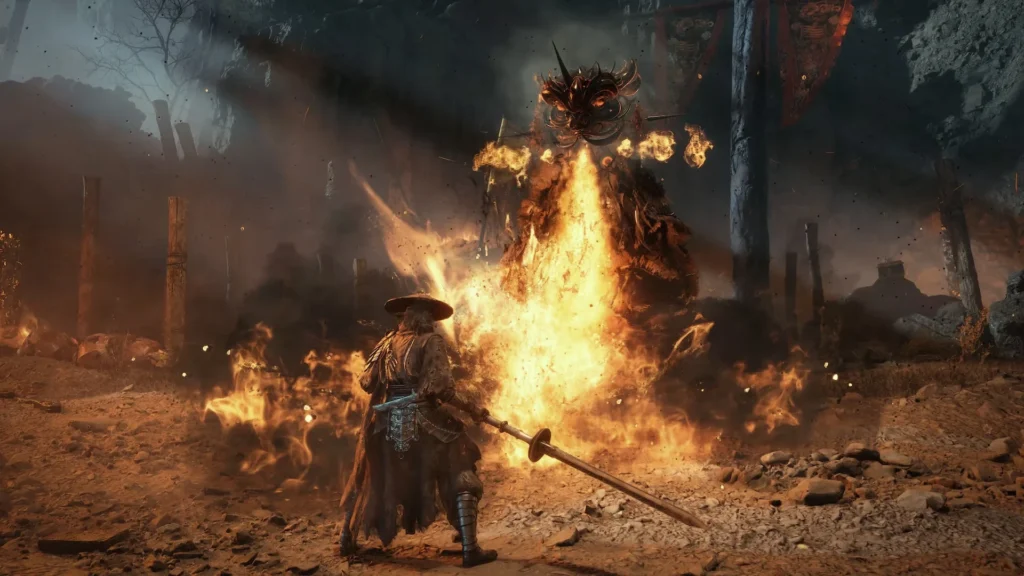
One of the bosses highlighted in recent previews is Flame, the Mask-Bound Lion Dance Grandmaster. The encounter demonstrates the game’s interest in combining distinctive character designs with demanding multi-phase battles.
Multi-phase bosses can change their behavior as a fight progresses, requiring players to adjust their expectations and remain attentive even after learning the initial attack patterns.
The game also includes encounters against multiple enemies, which can introduce additional positioning challenges. Players must consider threats from different directions rather than focusing exclusively on a single opponent.
These battles can provide memorable moments when their visual presentation supports fair and readable mechanics. The most satisfying encounters are those in which players understand why they succeeded or failed and can apply that knowledge during another attempt.
The full range of boss designs and their difficulty will be easier to judge once the complete game is available.
Difficulty Modes: Is Phantom Blade Zero Too Hard?
One of the more interesting aspects of Phantom Blade Zero is its range of difficulty options.
The developers have described three modes: Wayfarer, Hellwalker, and Sixty-Six Days. Each is intended to offer a different level of challenge.
Wayfarer is designed for players who primarily want to enjoy the story and explore the world without facing the game’s most demanding combat conditions.
Hellwalker increases the challenge, including more advanced and adaptive enemy behavior. It is aimed at players who want opponents that place greater demands on their combat skills.
Sixty-Six Days offers another challenge-focused option for players who want a more demanding experience.
These choices are important because action games can attract very different audiences. Some players enjoy repeatedly practicing difficult encounters, while others prefer a more relaxed experience that lets them focus on the story and atmosphere.
Providing several difficulty settings can help accommodate both groups, provided the options are clearly explained and meaningfully change the experience.
Players should not assume that choosing an easier mode removes all combat challenges. The objective is to provide a different balance rather than necessarily eliminating the need to understand the game’s systems.
For newcomers who are interested in the story but are uncertain about demanding action games, Wayfarer may be the most approachable starting point. More experienced players can consider the tougher options if they want additional pressure.
The Wulin World and Visual Design
Phantom Blade Zero takes place in a world that combines traditional Chinese visual influences with dark fantasy and unusual technological elements.
The environments include ornate architecture, atmospheric landscapes, narrow passages, ruined structures, and locations that emphasize the contrast between beauty and danger.
This approach helps distinguish the game from action RPGs built around more familiar medieval European fantasy settings.
The Wulin is not merely a backdrop for combat. Its factions, locations, and inhabitants contribute to the atmosphere of a world shaped by martial arts traditions, rivalries, and hidden agendas.
The game’s visual direction also incorporates elements of what the developers call Kungfupunk. This combines traditional martial arts imagery with mechanical designs and other unexpected influences, creating an identity that is neither entirely historical nor conventional science fiction.
Unreal Engine 5 provides the technical foundation for the game’s environments, character models, lighting, and elaborate combat animations.
The use of motion capture and the involvement of martial arts filmmaker and actor Donnie Yen as a creative consultant are also intended to strengthen the authenticity of the fighting presentation. Yen portrays Mó Yuan through facial and motion capture.
However, impressive trailers do not automatically guarantee technical perfection. Frame-rate consistency, image quality, loading times, and overall stability need to be evaluated on the final release and the specific platform being used.
The game’s visual direction is promising, but its lasting impact will depend on how well presentation, performance, and gameplay work together.
Exploration, Side Quests, and World Structure
Although combat is the central feature, Phantom Blade Zero also incorporates exploration and side activities.
Players can move through different areas of the Wulin, encounter characters, discover additional paths, and take on side quests alongside the main story.
These activities can provide more context for the world and offer opportunities to obtain resources or improve a character’s equipment.
Exploration also gives the game room to vary its pace. A continuous sequence of major battles can become exhausting, so quieter moments and optional objectives can help create a more balanced adventure.
The structure of the world matters because players need to understand where they are going and why particular areas are worth exploring. Clear environmental design can make navigation feel natural without removing the satisfaction of discovering hidden routes or optional encounters.
The developers have also shown sections featuring traversal challenges and movement through vertically designed environments. These moments can create variety between combat encounters and encourage players to pay attention to their surroundings.
The final balance between main missions, exploration, and optional content will determine how much freedom players have outside the central narrative.
Players who prefer a tightly focused action adventure may appreciate a direct progression structure, while those who enjoy investigating every area will want to see how much optional content the full release contains.
Is Phantom Blade Zero a Soulslike?
Phantom Blade Zero is often compared to Soulslike games because of its challenging enemies, boss battles, and emphasis on learning combat patterns. However, it also has important differences.
Its combat is designed around faster martial arts action, elaborate weapon combinations, and cinematic movement. Instead of simply copying the slower rhythm associated with some Soulslike titles, it attempts to create a distinct style inspired by wuxia films.
Recent hands-on previews have described the experience as more forgiving than some traditional Soulslike games, particularly in the way it approaches defensive timing and health management.
The available difficulty modes also provide players with greater control over the challenge they want to experience.
That does not mean every fight will be easy. Players should still expect to learn enemy behavior, recognize opportunities, and make decisions under pressure.
The most useful way to describe Phantom Blade Zero is as an action RPG with some Soulslike influences rather than assuming it follows every convention of the genre.
For players who enjoy difficult boss encounters but prefer a faster, more cinematic style of combat, this distinction may make the game particularly appealing.
Release Date, Platforms, and Price
Phantom Blade Zero is scheduled to launch on October 29, 2026.
The officially announced platforms are:
- PlayStation 5
- PC through Steam
The game is a single-player experience, with its core design focused on Soul’s journey through the Wulin.
The Brazilian PlayStation Store has listed the standard edition at R$229.90. Prices can change, so players should confirm the current price in their regional store before purchasing.
The standard edition includes the complete game. Pre-order information has also advertised early access to the Treasure Basin accessory and the Legacy outfit. According to the official listing, these items can also be obtained through normal progression, meaning the advertised early unlocks are not presented as permanently exclusive equipment.
PC players should consult the current Steam listing for system requirements and compatibility information before purchasing.
Because the game has not yet launched, players should also wait for final technical reports if they are particularly concerned about performance on their chosen hardware.
Should You Buy Phantom Blade Zero at Launch?
Phantom Blade Zero has several promising qualities for players who enjoy action RPGs.
Its martial arts-inspired combat, unusual visual identity, boss encounters, weapon customization, and difficulty options give it a clear direction. The story also provides a personal reason for Soul to continue fighting, while the wider conspiracy offers a mystery that can connect individual encounters to a larger narrative.
Players who enjoy fast-paced action, learning boss patterns, and experimenting with different weapons may find the game especially appealing.
Its difficulty options could also help it reach a broader audience than action games that offer only one fixed challenge level.
However, the complete game still needs to prove that its combat remains engaging over the full campaign and that its narrative, exploration, and progression systems maintain a consistent level of quality.
Technical performance is another consideration. A game can look impressive in promotional footage but still require further evaluation once players experience it on their own systems.
For cautious buyers, waiting for independent reviews of the full release is a sensible option. Those who are already excited by the combat and setting may decide that the game fits their interests, but they should still check the final platform details and regional price.
★ Final Verdict
Phantom Blade Zero is shaping up to be a distinctive action RPG that draws on Chinese martial arts cinema rather than relying exclusively on familiar fantasy conventions.
Its fast-paced combat, varied weapon options, challenging boss encounters, and dark Wulin setting provide a strong foundation. The involvement of Donnie Yen and the game’s focus on cinematic martial arts further reinforce its identity.
The most important questions are whether the complete adventure maintains the quality of its early combat encounters, whether the story delivers a satisfying conclusion, and how well the final game performs on PS5 and PC.
PlayOnReviews recommendation: Keep Phantom Blade Zero on your watchlist if you enjoy action RPGs, martial arts-inspired combat, and challenging boss battles. Its October 29, 2026 release is close, so checking independent reviews of the complete game before purchasing will provide a clearer picture of its overall quality.
Editorial note: This is a pre-release preview based on official information and published hands-on previews. PlayOnReviews has not independently tested the game, and no independent gameplay score is assigned.
Official and reference sources: PlayStation Blog, the official Steam product page, and published hands-on previews from Game Informer and RPGFan.