
Split Fiction Review – Is This Co-Op Adventure Worth Playing?
Some games are designed to be played alone. Others are designed around the idea that two people should experience the adventure together.
Split Fiction belongs firmly in the second category.
Developed by Hazelight Studios, the creators of It Takes Two and A Way Out, Split Fiction is a cooperative action-adventure that constantly changes its mechanics, worlds, and challenges. Instead of repeating the same gameplay formula for an entire campaign, the game keeps introducing new ideas and finding creative ways to make both players important.
The result is an adventure that feels unpredictable from beginning to end.
But does Split Fiction actually live up to Hazelight’s reputation for exceptional cooperative games?
A Story About Two Very Different Writers
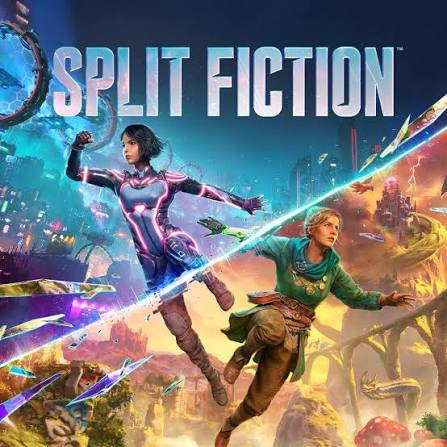
Split Fiction follows Mio and Zoe, two writers with very different personalities and creative styles.
Both characters become trapped inside fictional worlds based on their own stories after being connected to an experimental technology.
From there, the two protagonists must work together to escape.
The premise gives Hazelight an excuse to explore completely different genres and settings throughout the campaign.
One moment you’re exploring a futuristic science-fiction environment. Later, the game can suddenly throw you into a fantasy world filled with completely different mechanics.
This constant change is one of the game’s greatest strengths.
Cooperation Is the Entire Point
Split Fiction isn’t simply a game that happens to support two players.
Cooperation is built into practically every part of the experience.
Mio and Zoe frequently have different abilities, mechanics, or objectives. One player may need to activate something while the other uses the resulting opportunity to progress.
This creates situations where communication becomes important.
You aren’t simply running through the same level together.
You’re solving problems together.
That distinction is what makes Split Fiction so enjoyable.
The Gameplay Never Stops Changing
One of the most impressive things about Split Fiction is how frequently it introduces new gameplay concepts.
Instead of giving players one main mechanic and repeating it for several hours, Hazelight constantly experiments.
Players encounter platforming sections, puzzles, combat sequences, environmental challenges, vehicle sections, stealth-like moments, and many other situations.
Some mechanics exist only for a short period before the game moves on to something completely different.
That creates a sense of discovery throughout the campaign.
You never quite know what the next section is going to ask you to do.
The Level Design Is Exceptional
Split Fiction’s level design is one of its biggest achievements.
Every environment is designed around the idea that two players need to interact with it.
This means the developers can create situations that simply wouldn’t work in a traditional single-player game.
Players may be separated temporarily, forced to coordinate their movements, or given completely different objectives.
The best moments happen when both players realize what they need to do at almost the same time.
That feeling of solving something together is incredibly satisfying.
A Constant Stream of New Ideas
Split Fiction understands something that many games struggle with: new ideas are exciting.
Rather than stretching one mechanic across an entire campaign, Hazelight introduces ideas and moves on before they become repetitive.
This approach keeps the experience fresh.
Even optional sections can introduce surprising mechanics or unusual scenarios.
These moments aren’t always necessary to complete the story, but they contribute to the feeling that the developers were constantly experimenting.
The Two Characters Complement Each Other
Mio and Zoe aren’t simply two avatars controlled by different players.
Their personalities are an important part of the experience.
Their different perspectives create tension, humor, and character development throughout the journey.
The contrast between them also fits naturally with the game’s central theme of storytelling.
Their fictional worlds reflect their personalities and creative interests, giving the environments more meaning than simply being visually different levels.
The Game Is Extremely Accessible
Another major advantage is how easy it is to get into Split Fiction.
You don’t need to be an experienced gamer to understand the basic objective.
The game gradually introduces its mechanics and usually gives both players enough time to understand what they need to do.
The controls are also designed to avoid unnecessary complexity.
This makes the game particularly effective for playing with a friend, partner, family member, or someone who doesn’t regularly play games.
Friend’s Pass Makes Co-Op Easier
Split Fiction also benefits from Hazelight’s approach to cooperative multiplayer.
The Friend’s Pass system allows one player who owns the game to invite another person to participate in the experience without requiring both players to purchase the full game.
This significantly lowers the barrier to playing the campaign with someone else.
For a game whose entire identity revolves around cooperation, that is an excellent feature.
Visuals and Art Direction
Split Fiction isn’t trying to deliver photorealism at every moment.
Instead, it uses a wide variety of visual styles to make each world feel distinct.
Science-fiction environments can look dramatically different from fantasy areas, and the constant changes prevent the campaign from becoming visually repetitive.
The variety also reinforces the story.
Because the game is built around fictional worlds created by writers, the developers have plenty of freedom to experiment with visual design.
Performance and Presentation
The game generally maintains a polished presentation across its supported platforms.
The large number of environments and gameplay mechanics is particularly impressive considering how quickly the game moves between different scenarios.
Loading and transitions are also handled in a way that helps maintain the feeling of a continuous adventure.
As with any technically ambitious game, players can encounter occasional imperfections, but they rarely interfere with the core experience.
The Soundtrack and Audio Design
The audio design does an excellent job of supporting the constant changes in tone.
Different environments receive their own musical identities, while sound effects help make combat, movement, and environmental interactions feel responsive.
The soundtrack becomes particularly effective during major story moments, where it helps elevate the emotional impact of the scene without overwhelming the characters.
Is Split Fiction Too Short?
One criticism some players may have is that Split Fiction isn’t designed to be an endless game.
The campaign has a focused structure and prioritizes variety over hundreds of hours of content.
However, this is arguably one of its strengths.
The game knows what it wants to be and doesn’t stretch its mechanics unnecessarily.
By constantly introducing new ideas, Split Fiction manages to keep the experience engaging without requiring an enormous runtime.
What Could Be Better?
Split Fiction is an excellent co-op experience, but it isn’t perfect.
The constant introduction of new mechanics means that some ideas don’t have enough time to develop before the game moves on.
Players who prefer deeper progression systems may also find the experience relatively lightweight.
There isn’t a traditional RPG-style progression system with dozens of statistics, equipment upgrades, or character builds.
The focus is instead on the experience itself.
That won’t appeal to everyone.
Is Split Fiction Worth Playing?
Absolutely.
If you have someone to play with, Split Fiction is one of the easiest cooperative games to recommend.
Its greatest achievement is making cooperation feel natural rather than forced.
Both players are constantly involved, and the game rarely gives one person the feeling that they’re simply following the other.
Every few minutes, something new can happen.
A new mechanic appears.
The environment changes.
The characters enter another fictional world.
A new challenge requires both players to communicate.
That constant variety keeps the campaign moving forward.
PlayOnReviews Score
9.5/10
Split Fiction is an outstanding cooperative adventure that constantly surprises players with new mechanics, worlds, and challenges. Hazelight once again demonstrates why it is one of the best studios in the industry when it comes to designing games specifically for two players.
Verdict: Highly Recommended
✓ Positive Points
- Excellent cooperative gameplay
- Creative and constantly changing mechanics
- Fantastic level design
- Strong character chemistry
- Great variety of environments
- Easy to learn
- Excellent pacing
- Friend’s Pass makes co-op more accessible
- Plenty of memorable moments
× Negative Points
- Some mechanics are introduced and abandoned quickly
- Limited traditional progression
- Requires another player for the full experience
- Some sections may feel simpler than others
★ Final Verdict
Split Fiction proves that cooperative games don’t need to sacrifice creativity or ambition.
Hazelight Studios has created an adventure that feels specifically designed around two people playing together, and almost every major mechanic supports that philosophy.
The constantly changing gameplay, imaginative worlds, strong character chemistry, clever level design, and emphasis on communication make it one of the most enjoyable cooperative experiences in recent years.
It may not satisfy players looking for deep RPG progression or a massive open world, but that’s not what Split Fiction is trying to accomplish.
It’s a focused adventure designed to be experienced with another person.
And when it works at its best, it creates something that many single-player games simply can’t replicate: memorable moments that both players experience together.