
Star Wars: Galactic Racer Review — Gameplay, Story & Is It Worth It?
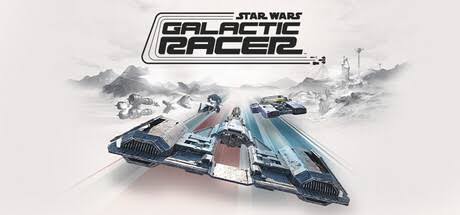
Star Wars: Galactic Racer takes the legendary science-fiction universe in a different direction, focusing on high-speed competition instead of lightsaber battles and traditional space combat. Developed by Fuse Games and published by Secret Mode, the game brings players into the Galactic League, an underground racing circuit where skilled pilots compete across dangerous environments using a variety of futuristic vehicles.
Released on October 6, 2026, for PlayStation 5, Xbox Series X|S, and PC, Galactic Racer aims to deliver a fresh racing experience built around aggressive driving, vehicle customization, branching routes, and competitive multiplayer. Rather than relying on the Force or familiar heroic adventures, the game emphasizes speed, strategy, and the decisions players make on the track.
But does Star Wars: Galactic Racer offer enough depth to stand out among modern racing games? Here is what players should know about its gameplay, campaign, vehicles, multiplayer features, and overall appeal before deciding whether it deserves a place in their gaming library.
What Is Star Wars: Galactic Racer?
Star Wars: Galactic Racer is a racing adventure set in the Star Wars galaxy during a period of change following the fall of the Empire. As the galaxy attempts to rebuild, underground racing becomes a major source of entertainment, competition, and opportunity.
At the center of this world is the Galactic League, an unofficial racing circuit supported by powerful interests and populated by pilots willing to take significant risks to become champions. The competition is not simply about crossing the finish line first. Players must learn the tracks, manage their vehicles, choose upgrades, and react to rivals who can turn a promising race into a difficult fight for survival.
One of the game’s defining ideas is its emphasis on racing itself. The experience is designed around piloting different repulsorcraft, mastering routes, and developing a personal racing strategy rather than using the traditional abilities associated with Jedi or Sith characters.
This approach gives Galactic Racer a distinct identity within the Star Wars gaming catalog. Instead of presenting another action-adventure focused on exploration and combat, it places racing at the heart of the experience.
Gameplay and Racing Mechanics
The main attraction of Star Wars: Galactic Racer is its focus on high-speed competition across varied environments. Players can race through familiar Star Wars locations and discover other planets, each introducing different visual themes and track conditions.
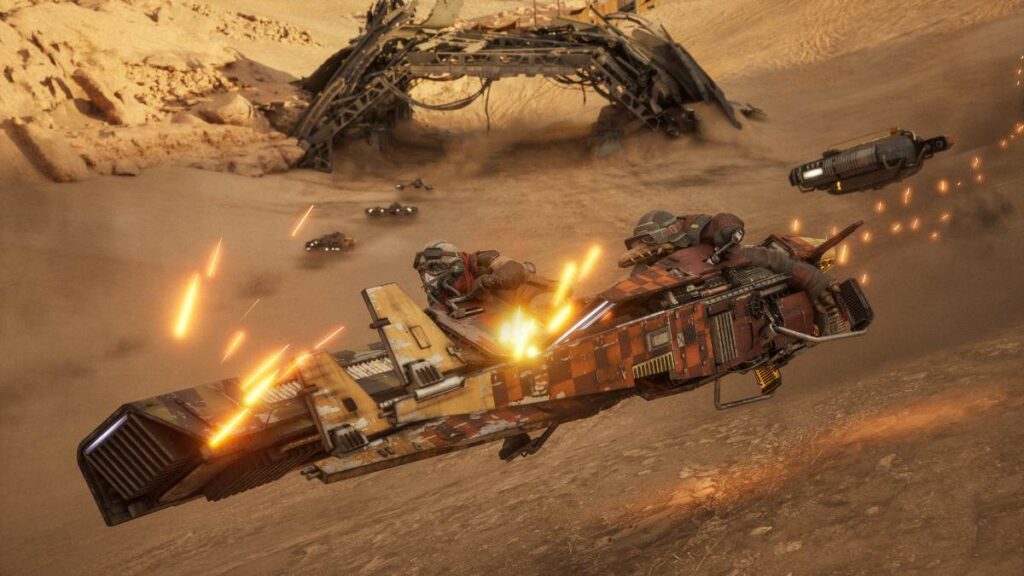
Jakku, known for its desert landscapes and enormous wreckage, is one of the recognizable locations featured in the game. Other environments include icy terrain, volcanic surfaces, and lush planetary settings. These differences are intended to make each race feel distinct and encourage players to adapt their driving techniques.
The tracks also feature branching routes and risk-reward decisions. Choosing a more dangerous path may provide a competitive advantage, but the potential reward comes with the possibility of losing valuable time or making a costly mistake.
Racing is not presented as a simple exercise in maintaining maximum speed. Players need to understand the layout of each circuit, anticipate hazards, and decide when to take risks. Learning a track and finding a consistent racing line can become just as important as selecting the right vehicle.
Aggressive competition is another part of the experience. Players can use maneuvers and takedowns to challenge their rivals, making positioning and timing important during close races. However, taking unnecessary risks can disrupt a promising run, so knowing when to push forward and when to prioritize control is central to the game’s design.
For players who enjoy racing games that reward practice and track knowledge, these systems could provide a satisfying foundation. The real test is how well the handling, track variety, and progression work together over extended play sessions.
Vehicles, Customization, and Progression
Galactic Racer features several classes of repulsorcraft, including landspeeders, speeder bikes, skim speeders, and podracers. Each vehicle type offers a different approach to racing, giving players options beyond choosing a single machine and using it for every event.
Vehicle selection matters because different classes have their own handling characteristics and tactical advantages. A vehicle that performs well on one circuit may not necessarily be the ideal choice for a track with different hazards, turns, or opportunities for aggressive maneuvers.
Customization adds another layer to the experience. Players can unlock parts, improve their vehicles, and develop builds that suit their preferred racing style. Upgrades can provide different stat boosts and abilities, encouraging experimentation rather than relying on one universal setup.
This progression system is particularly important because Galactic Racer incorporates a runs-based structure. Players take part in racing tours, make decisions about which events to tackle, and work toward improving their chances of success. A failed attempt does not necessarily mean that every bit of progress disappears, as certain perks and unlocks can carry over into future runs.
The result is a system that combines racing with elements of long-term progression. Players are encouraged to learn from previous attempts, refine their vehicle configurations, and approach later competitions with a better understanding of the challenges ahead.
For players who enjoy adjusting vehicle setups and gradually improving their performance, this structure may offer more depth than a straightforward collection of disconnected races.
Story and Characters
Although racing is the main attraction, Star Wars: Galactic Racer also includes a single-player narrative.
The story follows Shade, an aspiring racer who enters the Galactic League with a personal reason to challenge the Bool family. The league’s champion, Kestar Bool, uses his influence to maintain his position and extend his power. Shade’s journey becomes a struggle to overcome this established champion while navigating the politics and rivalries surrounding the competition.
Shade also receives support from Hibi, an Ardennian mechanic who operates a workshop and helps prepare vehicles for upcoming events. Another notable character is Sebulba, the Dug podracer associated with the racing sequences in Star Wars: Episode I — The Phantom Menace.
The inclusion of Sebulba creates a connection to one of the franchise’s most recognizable racing moments. However, Galactic Racer is not simply a recreation of the original podracing sequences. It builds a new competitive setting around different characters, vehicles, tracks, and rivalries.
The campaign also gives players choices about which events to pursue as they progress through the league. This structure allows racing decisions to influence the path through the competition, rather than making the entire experience feel like one uninterrupted championship.
The story’s effectiveness ultimately depends on the writing, character development, and how naturally narrative moments fit between races. Racing fans looking primarily for competition may care less about these elements, while Star Wars enthusiasts may appreciate having new characters and a different corner of the galaxy to explore.
Game Modes and Multiplayer
Star Wars: Galactic Racer includes several ways to race, with Campaign, Scenario, and Arcade modes forming part of its overall structure.
The Campaign mode focuses on progressing through the Galactic League, selecting events, developing vehicles, and dealing with the challenges that appear along the way. Because the game uses a runs-based system, players may need to rethink their strategy after a difficult tour and begin another attempt with improved knowledge or new upgrades.
Scenario mode provides another way to approach specific racing situations, while Arcade mode offers a more direct option for players who want to focus on the racing experience itself.
Multiplayer is also an important part of the package. Online competition gives players an opportunity to test their driving against other racers instead of relying exclusively on computer-controlled opponents.
Competitive racing can add considerable replay value when the handling is satisfying and the tracks reward skill. Human opponents also create unpredictable situations, forcing players to respond to different strategies and mistakes in real time.
However, online functionality is not equally important to every player. Anyone primarily interested in the single-player campaign should consider whether the available solo content provides enough variety for their preferred style of play. Players who enjoy racing against friends or competing online may find multiplayer a more significant reason to consider the game.
Graphics, Environments, and Star Wars Atmosphere
A major advantage of setting a racing game in the Star Wars universe is the opportunity to combine recognizable locations with imaginative new environments.
Galactic Racer uses this opportunity to move between desert tracks, icy surfaces, volcanic landscapes, and other planetary settings. The variety helps establish a sense of traveling across a larger galaxy rather than remaining in a single racing venue.
Jakku is particularly suited to this concept because its landscape contains the remains of enormous spacecraft. Racing around such wreckage provides a strong visual connection to the films while giving the developers an unusual backdrop for high-speed competition.
The vehicle designs are another important part of the atmosphere. Landspeeders, speeder bikes, skim speeders, and podracers each contribute to the game’s futuristic identity, while customization gives players opportunities to create a more personal look for their machines.
The overall presentation must also communicate speed clearly. Readable tracks, responsive visual feedback, and environments that remain understandable during intense races are essential in a game where split-second decisions matter.
Although official trailers and screenshots can demonstrate the visual direction, they cannot independently establish the game’s real-world performance on every platform. Frame-rate consistency, image quality, loading behavior, and technical stability should be assessed through platform-specific testing rather than assumed from promotional footage.
Difficulty, Replayability, and Long-Term Appeal
The runs-based progression system could become one of Galactic Racer’s most important features for long-term engagement.
Instead of treating every race as an isolated event, the game connects individual competitions to a larger journey through the Galactic League. Players select events, improve their vehicles, and attempt to make further progress before mistakes end a tour.
This structure can encourage experimentation. A player who struggles with a particular track may decide to pursue a different event, earn additional upgrades, or adjust their vehicle configuration before attempting the challenge again.
Branching routes and different environmental hazards also provide reasons to learn individual circuits. The more familiar players become with the tracks, the better equipped they should be to make informed decisions about shortcuts, risky maneuvers, and vehicle setup.
Multiplayer can extend the experience further by providing competition beyond the single-player campaign. However, the lasting value of any online racing mode depends on factors such as matchmaking, player activity, balance, and ongoing support.
Replayability will therefore depend on how effectively the game balances variety with meaningful progression. A large number of races is useful, but the quality of the driving, the distinctiveness of the tracks, and the motivation to improve are ultimately more important.
Is Star Wars: Galactic Racer Worth Playing?
Star Wars: Galactic Racer has several appealing ideas for players who want something different from the franchise’s usual action-adventure formula.
Its combination of multiple vehicle classes, aggressive racing, customizable builds, branching routes, and a story-driven campaign gives it several ways to appeal to racing fans. The Galactic League also provides a new setting for Star Wars storytelling without requiring players to spend the entire game fighting enemies on foot.
The game may be particularly interesting to players who enjoy mastering tracks, experimenting with upgrades, and improving their results over repeated attempts. Its multiplayer component may also appeal to those who prefer testing their abilities against other players.
On the other hand, it may be a less obvious choice for players who mainly want lightsaber combat, extensive exploration, or a traditional open-world Star Wars adventure. Galactic Racer is built around racing, so the quality of its handling, track design, and competitive systems will matter far more than the presence of familiar franchise references alone.
Price and platform should also factor into the decision. Players should check the current store listing for their chosen platform, compare available editions, and confirm the features they actually want before purchasing.
★ Final Verdict
Star Wars: Galactic Racer takes a promising approach by building an entire game around competitive racing in the Star Wars universe. Its combination of different repulsorcraft classes, a narrative campaign, vehicle upgrades, branching routes, and online competition gives it a broader structure than a simple collection of themed races.
The concept is especially appealing for players who have wanted a modern Star Wars racing experience with its own characters and competitive identity. At the same time, the game’s long-term success depends on the quality of its driving mechanics, technical performance, track variety, and multiplayer experience.
For PlayOnReviews readers, the most important consideration is whether the racing itself matches their expectations. The Star Wars setting provides a strong foundation, but satisfying handling and meaningful progression are what will determine whether the game remains enjoyable after the novelty of its locations and vehicles wears off.
PlayOnReviews recommendation: Star Wars: Galactic Racer is worth considering for racing fans and Star Wars enthusiasts who want a different kind of adventure in the galaxy. Before making a final purchase decision, check current player feedback and platform-specific performance reports, especially if you plan to spend most of your time in multiplayer.
Editorial note: This article is based on official game information and published player feedback. It is not a hands-on PlayOnReviews review, and no independent gameplay score is assigned.