
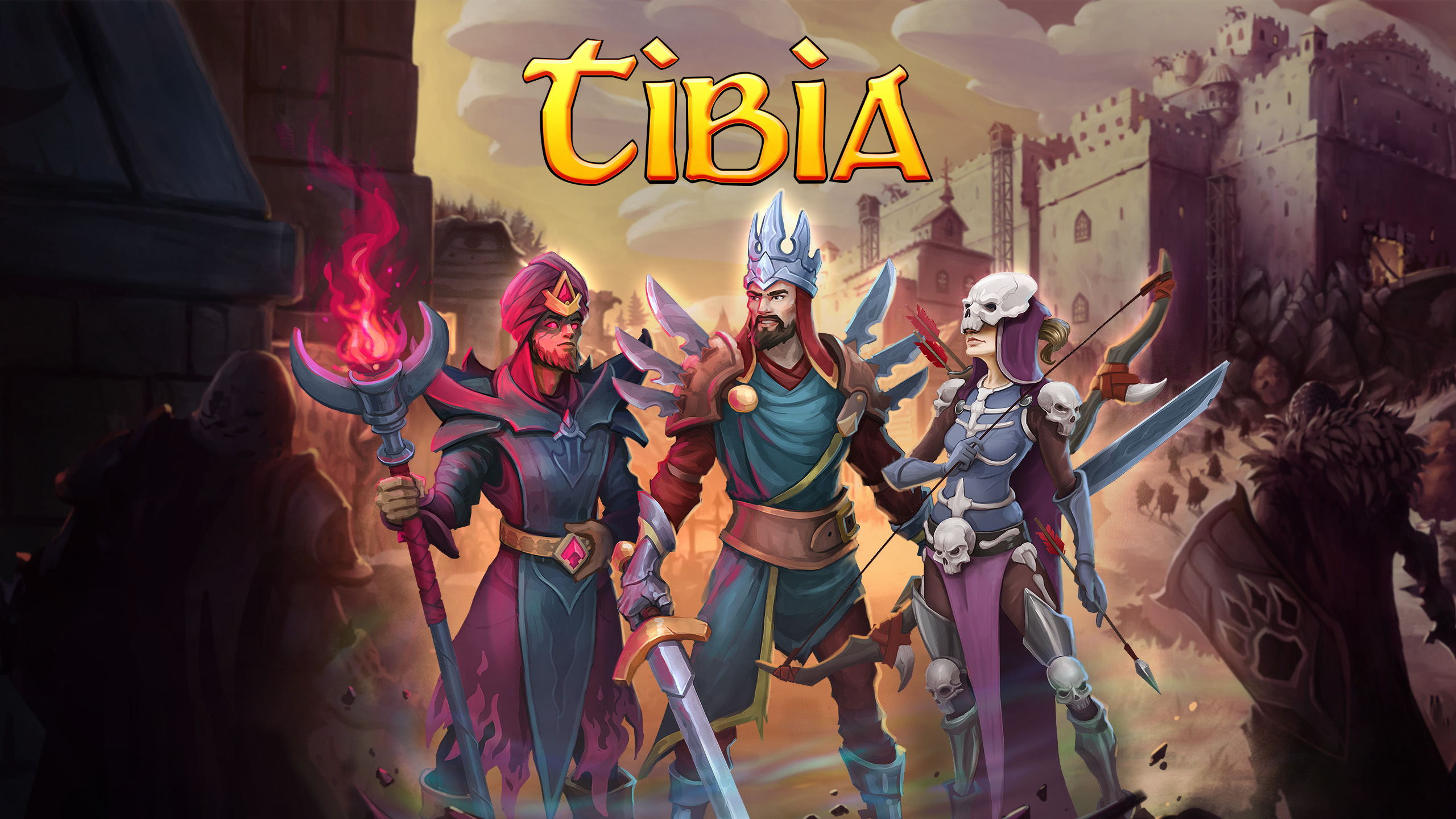
Tibia: The Legendary MMORPG That Refused to Disappear
Long before massive online games became known for cinematic graphics, enormous budgets, and realistic worlds, a small fantasy game was quietly building a dedicated community. Released in 1997, Tibia became one of the longest-running MMORPGs in gaming history.
For many players, Tibia was more than a role-playing game. It was a world of dangerous hunts, difficult quests, valuable loot, guild rivalries, and friendships formed over countless hours. Its distinctive graphics might look simple compared with modern games, but its world has kept players returning for decades.
So, what happened to Tibia? Did the legendary MMORPG finally disappear, or is it still alive today?
How Tibia Started in 1997
Tibia was developed by a group of German university students who wanted to create an online fantasy world that people could explore together. The first public server went online on January 7, 1997, making Tibia one of the early graphical online role-playing games.
The project began as a small experiment inspired by earlier multiplayer text-based adventures. Instead of describing the entire world through text, Tibia allowed players to see characters, creatures, and environments through a graphical interface.
The original game was extremely limited compared with the experience players know today. Its world was small, and many of the systems that later became essential to the game had not yet been introduced.
Over time, the developers expanded the map, added monsters and items, and introduced features such as skills, magic, vocations, and storage depots.
What began as a student project gradually became a long-running online world with its own identity and community.
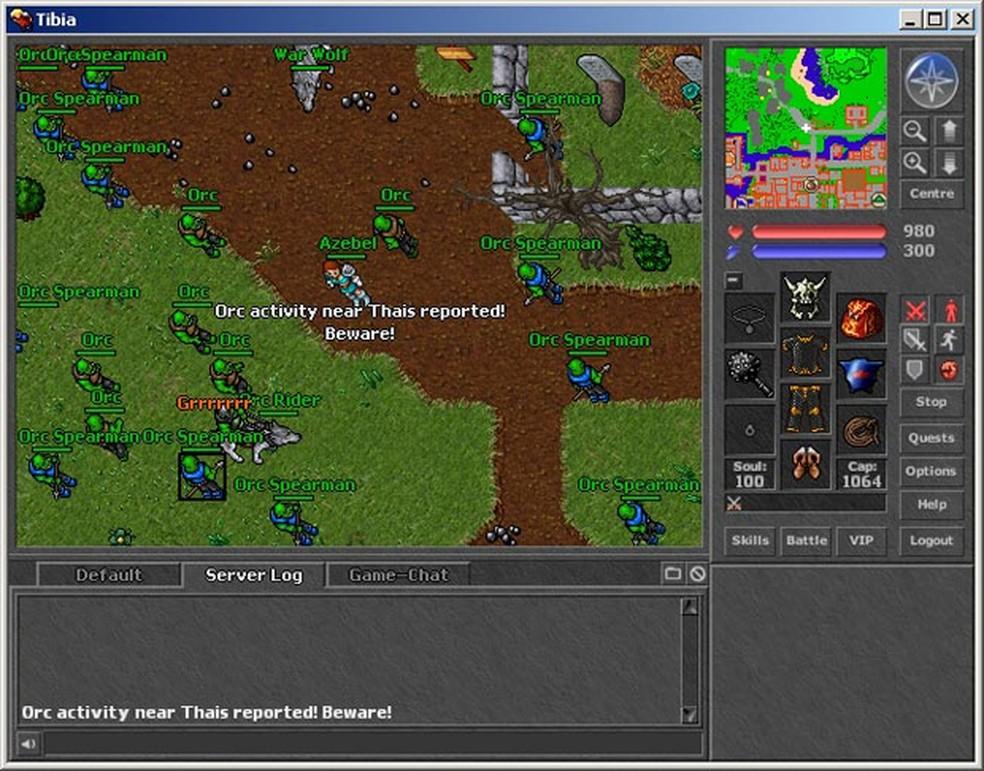
Suggested placement: Insert a screenshot of an older Tibia version immediately after this section. Ideally, show the classic interface, pixel-art graphics, and a character exploring the world.
What Made Tibia Different From Other MMORPGs?
Tibia developed a reputation for giving players considerable freedom while making their decisions matter.
Rather than relying on elaborate cinematic storytelling, the game encouraged exploration. Players traveled through towns, forests, caves, dungeons, and dangerous hunting grounds while discovering monsters, quests, and hidden locations.
Combat and character progression were central to the experience. Players gained experience, improved their characters, collected equipment, and searched for better places to hunt.
However, Tibia could also be unforgiving. Character death could result in the loss of experience and other progress, depending on the character’s circumstances and account protections. That risk made exploration and preparation important parts of the game.
A seemingly ordinary hunt could become memorable because of an unexpected encounter, a valuable item, or a difficult journey back to safety.
This combination of freedom, danger, and long-term progression helped Tibia stand apart from many more casual online games.
The Four Original Vocations
For much of its history, Tibia was built around four main vocations: Knight, Paladin, Sorcerer, and Druid.
Each offered a different approach to combat and character development.
Knights specialized in close-range combat and durability. Paladins focused on distance fighting, while Sorcerers and Druids relied heavily on magic, with different strengths and abilities.
Choosing a vocation influenced how players trained, selected equipment, approached monsters, and contributed to group hunts.
These roles also encouraged cooperation. A team with complementary vocations could take on challenges that would be much more difficult alone.
In 2025, Tibia introduced a fifth vocation, the Monk, marking a major change in a system that had defined the game for more than two decades.
The addition showed that even a long-established MMORPG could introduce significant changes while retaining its recognizable identity.
Why Tibia Became So Popular in Brazil
Brazil has a particularly important place in Tibia’s history. According to developer CipSoft, the game’s largest fan base is in Brazil.
The community grew around more than just leveling characters. Guilds, friendships, trading, hunting groups, and rivalries became important parts of the social experience.
For Brazilian players, Tibia also became a familiar part of internet café culture and the early days of online gaming. Logging in after school, meeting friends in town, or planning a group hunt could become part of a regular routine.
The game’s relatively modest graphical requirements also helped make it accessible to computers that could not run more demanding games.
Over the years, Portuguese-language communities, fan sites, guides, and discussion forums helped players share knowledge and keep the game part of gaming culture.
Tibia’s popularity in Brazil demonstrates how a game’s community can become just as important as its technology.
The Nostalgia of Rookgaard, Thais, and Old-School Adventures
Ask longtime Tibia players about their memories, and familiar locations often come up.
Rookgaard, the traditional starting island for generations of players, introduced newcomers to the basics of the world. It became associated with first characters, early hunts, and the excitement of discovering an unfamiliar game.
Thais and other major cities became gathering places where players traded items, met friends, and prepared for adventures.
The old graphics also played a major role in Tibia’s identity. Its top-down perspective and tile-based world looked different from the increasingly realistic 3D games that dominated later generations.
For some players, the simplicity made the world easier to understand. For others, the nostalgia comes from remembering the computers, internet connections, and friends they had when they first started playing.
These memories are difficult to reproduce in a new game because they are connected to a particular time in a player’s life.
How Tibia Survived While Other Online Games Disappeared
Online games often depend on a business model, an active player base, and servers that need continuous support. When a developer stops maintaining those systems, an entire virtual world can disappear.
Tibia took a different path by continuing to evolve.
Its developers expanded the game world, introduced new quests and creatures, adjusted systems, and released regular updates. The game also developed a long-term progression structure that gave experienced players new goals to pursue.
Its established community helped, too. Longtime players had reasons to return, while new content offered opportunities for newcomers to begin their own adventures.
Tibia’s continued operation was not simply a matter of refusing to change. The game survived by combining familiar foundations with ongoing development.
That balance is difficult to achieve. Changing too little can make a game feel outdated, but changing too much can alienate the community that made it successful.
Tibia Today: A Game That Still Receives Updates
Tibia is still active, and its developers continue to introduce new content and improvements.
In 2025, the game added the Monk as its fifth vocation. The new class brought another way to approach combat and cooperation, something especially notable for a game that had maintained the same four main vocations for most of its history.
The 2026 summer update introduced challenging new boss encounters, weapon progression features, and improvements intended to make the game more accessible to newer players.
These changes show that Tibia is not merely a preserved relic of the 1990s. It remains a developing online game, with systems that continue to change as the community and the developers evolve.

Suggested placement: Insert a current gameplay screenshot immediately after this paragraph. Choose an image showing a modern hunt, a boss encounter, or the updated game interface.
You can learn more about the game and its current updates through the official Tibia website and the developer’s official Tibia page.
Is Tibia Still Worth Discovering?
Whether Tibia is a good fit depends on what someone wants from an MMORPG.
Players who enjoy exploration, character progression, cooperation, trading, and a world with a long history may find plenty to appreciate. The game offers a different pace from many modern online titles, and understanding its systems can take time.
New players should also know that Tibia has changed substantially since its early years. There are more areas, creatures, quests, items, and gameplay systems than in the original version.
Returning players may recognize familiar places and mechanics, but they should expect a much larger experience than the one they remember.
The best way to approach Tibia is to understand that its appeal is not based solely on graphics. Its identity comes from the combination of risk, progression, freedom, and a community that has developed over decades.
What Tibia Teaches Us About Gaming History
Tibia’s story demonstrates that a game does not need to follow every industry trend to remain relevant.
It launched at a time when the internet was still developing, survived major changes in computer technology, and continued operating through several generations of gaming.
Its history also highlights the importance of community. Players help shape an online world through their friendships, shared knowledge, guilds, trading, and stories.
For many fans, Tibia is connected to memories that go beyond the game itself. It represents a period when discovering a new hunting area or meeting a group of players online could feel like a major adventure.
That emotional connection is part of what keeps long-running games meaningful even as the industry changes around them.
Final Thoughts
Tibia launched on January 7, 1997, and grew from a small student project into one of the world’s longest-running MMORPGs.
Its distinctive graphics, challenging gameplay, character progression, and active community helped it survive while many other online worlds disappeared. The game’s importance in Brazil is especially notable, with the country representing its largest fan base.
Today, Tibia continues to receive updates, introduce new features, and expand its fantasy world. Its evolution proves that a classic game can remain relevant when developers continue supporting it without abandoning its core identity.
For longtime players, Tibia is a reminder of old-school adventures and friendships formed online. For newcomers, it offers the opportunity to discover a world with nearly three decades of history.
The graphics may have started in another era, but Tibia’s journey is far from over.