
Club Penguin: What Happened to the Game Millions of Players Loved?
Club Penguin was more than an online game. For millions of players, it was a virtual world filled with friendships, parties, minigames, and memories. But in March 2017, the original game closed its servers, leaving a generation wondering what happened to their favorite snowy island.
Before online gaming communities became dominated by competitive multiplayer titles and massive live-service games, Club Penguin offered something different: a friendly virtual world where players could create a penguin, decorate an igloo, earn virtual coins, and explore an island with friends.
Launched in 2005, the game became one of the most recognizable online experiences of its era. Its colorful art style, regular events, and welcoming atmosphere helped turn a relatively simple browser game into a worldwide phenomenon.
However, the original Club Penguin eventually came to an end. Its replacement, Club Penguin Island, also failed to continue the original experience for long.
So, what happened to Club Penguin, why did it become so popular, and what made its disappearance such a memorable moment in gaming history?
1. How Did Club Penguin Become So Popular?
Club Penguin launched in October 2005, created by Lane Merrifield, Lance Priebe, and Dave Krysko. The game was designed primarily for children, offering a colorful online environment where players could interact through customizable penguin characters.
Instead of focusing on combat, complex missions, or competitive rankings, Club Penguin encouraged players to explore, socialize, and participate in activities at their own pace.
Players could visit different locations across the island, play minigames, earn coins, and purchase virtual clothing and decorations. They could also personalize their igloos, creating spaces that reflected their individual styles.
This combination of social interaction and lighthearted gameplay made the game accessible to players who might not have considered themselves traditional gamers.
Club Penguin also benefited from its regular updates. Seasonal celebrations, themed parties, and special events gave players reasons to return and discover what had changed.
For many people, logging into Club Penguin became part of their daily routine. It was not just about completing a game; it was about seeing friends, exploring new areas, and being part of a shared online community.
2. Why Did Disney Buy Club Penguin?
Club Penguin’s growing popularity attracted the attention of one of the world’s biggest entertainment companies.
In August 2007, The Walt Disney Company acquired Club Penguin’s parent company, New Horizon Interactive. Disney saw an opportunity to expand its presence in online entertainment and reach a young audience through a popular virtual world.
The acquisition gave Club Penguin access to the resources and global reach of a major entertainment brand.
For players, the game continued to receive new content, events, and updates. Its familiar identity remained intact, while its association with Disney helped make it even more recognizable.
The acquisition also demonstrated that online games could become valuable entertainment platforms in their own right. Club Penguin was not a traditional console release, yet it had developed a dedicated audience and a recognizable digital identity.
Its success became an early example of how social experiences, customization, and recurring events could keep players engaged over many years.
3. What Made Club Penguin Different From Other Games?
One of Club Penguin’s greatest strengths was its simplicity.
Players did not need a powerful computer or an expensive console. The original experience ran through a web browser, making it accessible to many households with an internet connection.
The game also gave players freedom to decide how they wanted to spend their time.
Some focused on earning coins through minigames. Others collected clothing, decorated their igloos, or explored every corner of the island. Many simply logged in to spend time with friends.
The Minigames
Club Penguin featured a collection of short activities that rewarded players with virtual coins.
These included games such as Pizzatron 3000, where players prepared pizzas, and Cart Surfer, which challenged them to perform tricks while riding a mine cart.
The minigames provided an easy way to earn currency and gave players something to do between social activities.
The Igloos
The igloo system was another major part of the experience.
Players could decorate their own virtual homes with furniture, flooring, and themed items. Over time, an igloo could become a personal showcase of a player’s achievements and creativity.
Friends could visit these spaces, making home decoration a social activity rather than just a cosmetic feature.
The Parties and Events
Regular parties transformed the island with new decorations, themed locations, and limited-time activities.
These events created a sense of anticipation. Players often returned to see the changes, discover secrets, and participate before the celebration ended.
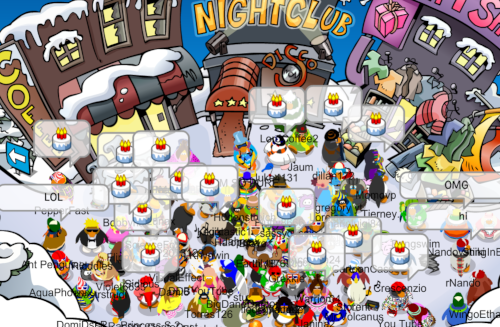
Image suggestion: A classic Club Penguin island scene featuring multiple penguin avatars.
4. How Club Penguin Created a Lasting Community
Club Penguin was built around the idea that a game could be a place to meet people.
Players recognized familiar usernames, attended parties together, visited one another’s igloos, and developed routines around the island’s events.
For younger players, the experience could feel like a digital playground. It offered opportunities for self-expression and social interaction without requiring everyone to compete against each other.
The developers also introduced chat restrictions and safety features designed for the game’s young audience. These measures helped distinguish Club Penguin from online spaces with fewer protections.
Of course, online safety required more than software alone, but the game’s emphasis on moderated interaction was an important part of its identity.
The community also extended beyond the game itself. Fans created videos, guides, artwork, and online discussions about their favorite activities and discoveries.
This helped Club Penguin become part of internet culture. Even players who eventually stopped logging in continued to remember its characters, locations, music, and events.
5. What Happened to the Original Club Penguin?
Despite its popularity, the original Club Penguin eventually reached the end of its run.
In January 2017, Disney announced that the existing desktop and mobile versions would be discontinued on March 29, 2017. The decision was connected to the launch of a new experience called Club Penguin Island.
The original game had been operating for more than a decade. For players who had spent years exploring its world, the announcement marked the end of a familiar part of their online lives.
As the closure approached, the game held farewell celebrations that gave its community a chance to revisit locations and enjoy the island one final time.
When the servers shut down, the original world was no longer accessible through its official service.
The closure was especially significant because Club Penguin was not simply a collection of levels that players could complete and move on from. Much of its value came from its shared online environment.
Once the servers went offline, players could no longer visit the same island together through the original game.
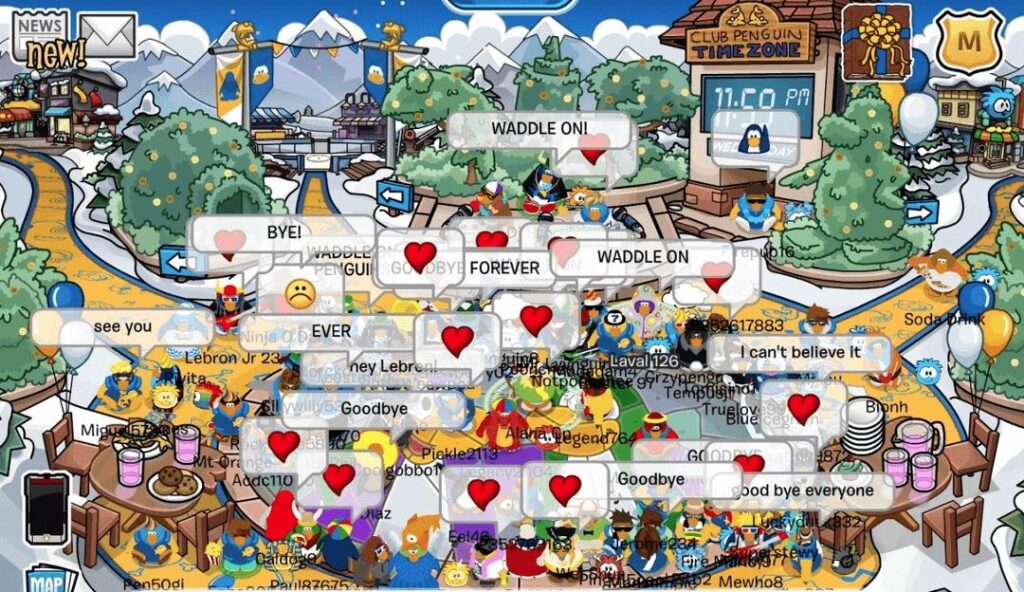
Image suggestion: The original Club Penguin during its final in-game celebration.
6. Why Did Club Penguin Island Fail to Replace the Original?
Disney introduced Club Penguin Island in 2017 as the next chapter for the franchise.
Rather than simply preserving the original browser game, the new experience introduced a redesigned world and a different approach to gameplay, with a greater emphasis on mobile devices.
Although it retained the penguin characters and recognizable setting, the new game did not reproduce every aspect of the original experience.
For longtime fans, the change meant leaving behind familiar locations, established routines, and elements of the game that had developed over more than a decade.
A replacement does not automatically recreate the community that made the original special. Even when a new game uses the same characters and setting, its controls, progression systems, and social features can change how players feel about it.
Club Penguin Island struggled to maintain the franchise’s momentum and was discontinued in 2018.
Its short lifespan made the transition particularly disappointing for fans who had hoped the new game would carry the original’s legacy forward.
However, it would be inaccurate to attribute the closure to a single cause without stronger evidence. The broader challenge was that the new experience did not sustain the franchise in the way Disney had hoped.
7. The Role of Changing Technology
Club Penguin also belonged to a particular era of internet gaming.
The original game relied on Adobe Flash, a technology that powered countless browser-based experiences throughout the 2000s and early 2010s.
Over time, the internet moved toward newer web technologies and mobile-first experiences. Flash was officially discontinued at the end of 2020, marking a major transition for browser gaming.
However, Club Penguin’s original servers had already closed in 2017. The end of Flash was part of the broader technological shift affecting browser games, rather than the direct cause of Club Penguin’s shutdown.
This distinction matters because the history of Club Penguin reflects both a business decision and a changing digital landscape.
Many players who grew up with browser games later moved toward mobile games, consoles, and larger online platforms. The way people discovered and played games was changing, and older browser-based experiences faced new challenges.
Club Penguin remains a useful example of how even a beloved online world can be affected by changes in technology, business priorities, and player expectations.
8. Can You Still Play Club Penguin Today?
The original Disney-operated Club Penguin is no longer available through its former official servers.
Over the years, however, fan communities have created independent projects inspired by the original game. These projects are separate from Disney’s discontinued service and do not restore the original official servers.
Their existence demonstrates how strongly players wanted to preserve the experience.
At the same time, fan recreations can differ in availability, features, moderation, and security. Players should be careful about sharing personal information or reusing passwords when interacting with unofficial services.
The continued interest in these projects also shows that Club Penguin’s appeal was not limited to its original technology. Players wanted to revisit the activities, locations, and social atmosphere they remembered.
For many fans, the nostalgia comes from the entire experience: the familiar music, the decorated igloos, the seasonal parties, and the feeling of returning to a place where friends might be waiting.
9. Why Do People Still Remember Club Penguin?
Club Penguin’s legacy is about more than the number of players it attracted.
For many people, the game was one of their first experiences with an online community. It introduced them to virtual currencies, customizable characters, social spaces, and the idea that a digital world could continue to evolve while they were away.
Its simple presentation also made it memorable. The penguins, snow-covered island, distinctive locations, and playful minigames created an identity that was easy to recognize.
The game encouraged players to build their own experiences instead of following a single story from beginning to end.
That freedom helped make the island feel personal. Two players could spend their time in completely different ways while still sharing the same world.
The closure also strengthened its place in internet nostalgia. When an online world disappears, the memories remain, but the original shared environment cannot simply be reopened.
That contrast is part of what makes Club Penguin so meaningful to former players today.
10. What Club Penguin Taught the Gaming Industry
Club Penguin demonstrated the value of building a game around community, personalization, and recurring experiences.
Its success showed that a game did not need realistic graphics or intense competition to attract a large audience. Social interaction, regular updates, and a recognizable world could be just as important.
It also highlighted the challenges of maintaining an online game over time.
Players become attached to more than characters and artwork. They build routines, friendships, and memories around the experience. Replacing an established game with a new version can be difficult if the elements that made the original special are not preserved.
The closure also illustrates a reality of online gaming: when a game depends on official servers, access can eventually disappear even if its community still cares about it.
Modern live-service games face similar questions about preservation, long-term support, and what happens when an online experience reaches the end of its life.
Club Penguin’s history is therefore relevant beyond nostalgia. It offers an example of both the possibilities and the limitations of creating a lasting digital world.
Final Thoughts: Club Penguin Was More Than a Game
Club Penguin began as a colorful browser game and grew into a virtual world that shaped the childhood memories of millions of players.
Its minigames, igloos, parties, and social spaces created an experience that was easy to enter but meaningful enough to revisit for years.
Disney’s decision to close the original game in 2017 and discontinue Club Penguin Island in 2018 marked the end of its official online era. Yet the franchise’s legacy continues through the memories and stories shared by its former players.
The history of Club Penguin reminds us that games can become important parts of people’s lives even when their technology seems simple by modern standards.
Sometimes, the most memorable gaming experiences are not about defeating a final boss or reaching the highest rank. They are about the places we visited, the friends we met, and the moments we shared.
For an entire generation of players, Club Penguin was one of those places.